“The more that you read, the more things you will know, the more that you learn, the more places you’ll go.” —Dr. Seuss

Category: Weekly Reflections

Post 3: Stop-Motion Videos In-Situ

This week we went to a local middle school and created stop-motion videos with Grade 5 students! This week I will be documenting my experience using the Gibbs Reflective Cycle:
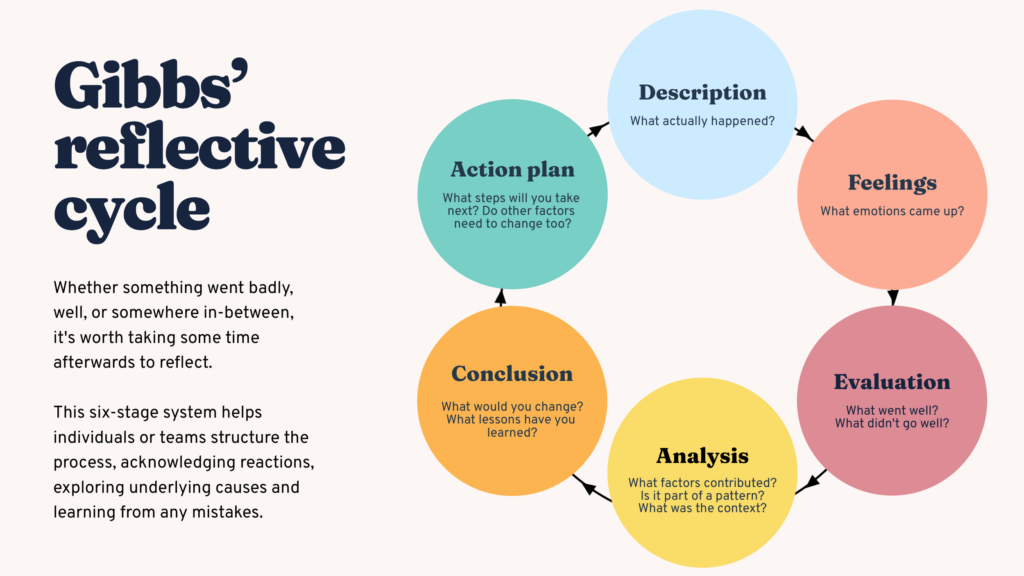
Image from BiteSizeLearning.com

I will be using this model because it helps me think critically about my in-situ experience, reflect on my learning and identify areas for future growth and improvement.

Description

This week, we created stop-motion videos with Grade 5 students using Zing Studio stop-motion app! I was paired with another teacher candidate and together we worked with three students to create a stop-motion video. First, we introduced ourselves and began planning the story we wanted to create using the My Animated Story outline that I shared in Weekly Journal #2. This outline helped us identify the characters, setting, problem, actions that took place and the ending of the story.

Then, we assigned roles to each student. One student was responsible for recording and creating the stop-motion video, another selected the objects for each scene and the third contributed ideas and helped develop the story as it progressed. Once we had our story plan and student roles established, we were ready to begin creating our stop-motion story!

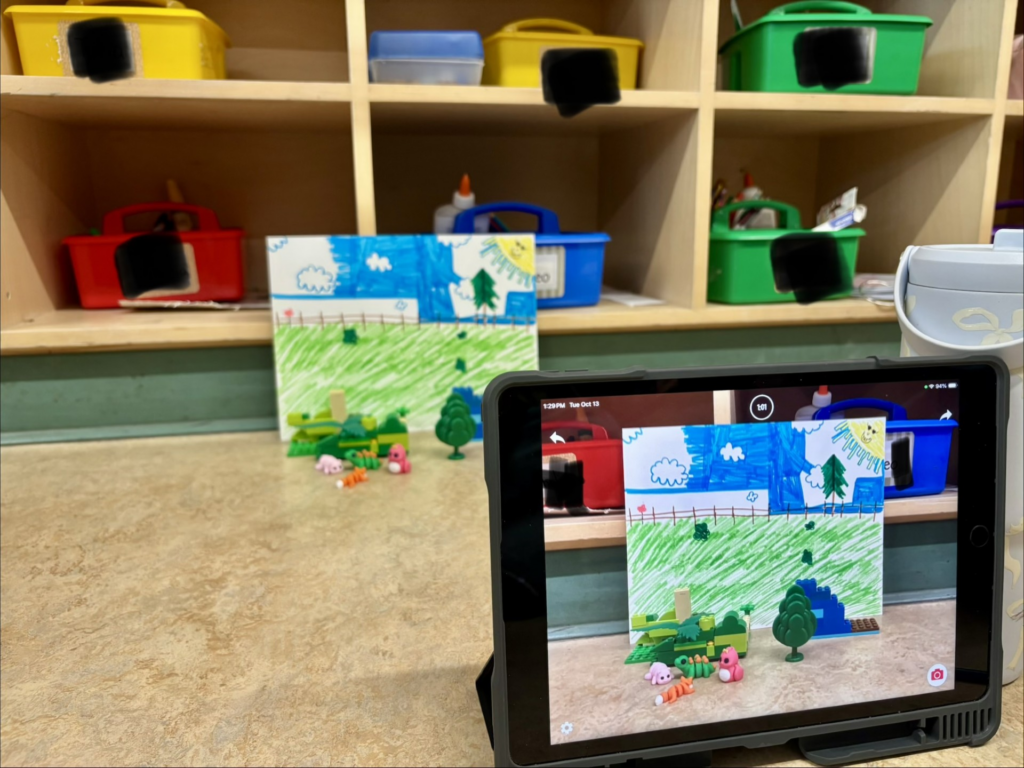
Below is an image that I took of the setting of our story:
Feelings

I was excited to finally be back in the classroom and working with students again! I enjoyed seeing how well the students collaborated as a team, how creative they were and how eager they were to share their ideas throughout the activity. I am always excited and happy to work with students and be in the classroom environment. This is where everything we learn in class comes together. The theories and concepts we discuss begin to connect through real experiences, like pieces of a puzzle falling into place.

Evaluation

What went well?

  1. The students demonstrated excellent teamwork and were very respectful of one another. When I was assigning roles, if two students wanted the same role, they would say, “You can have it,” and then the other would respond, “No, you can have it.” They wanted to make sure everyone was happy with their role and felt included. It was great to see such kindness and consideration for one another. The students were also really engaged and had many creative ideas.
  2. The teacher candidate and I worked well together and bounced ideas off one another throughout the activity. I took the lead in having the students introduce themselves and explaining the activity and we both helped assign roles. The teacher candidate I was paired with was especially skilled with technology and did a great job helping the students learn how to use the stop-motion app to create their videos.

What did not go well?

Nothing went wrong during the activity. The only challenge was that the students were incredibly creative and continuously came up with new ideas and additions for their stop-motion video. Unfortunately, we did not have enough class time to include all of their ideas.

Analysis

This experience highlighted the importance of providing students with opportunities to collaborate, be creative and use technology in meaningful ways to support their learning. The students worked collaboratively and ensured that everyone felt included. They demonstrated strong teamwork, decision-making and planning skills while developing their story.

Every time I participate in an in-situ experience, whether it involves reading a book, teaching a lesson, or facilitating a new activity, I wonder whether students will find it engaging. Although I believe activities such as stop-motion videos and Readers Theatre are valuable learning experiences, I never know how students will respond until they participate. This experience reminded me that students are often highly creative, motivated and engaged when given opportunities to express themselves. It also reinforced that not every activity will appeal to every student and that is okay because all students have different interests and learning preferences!

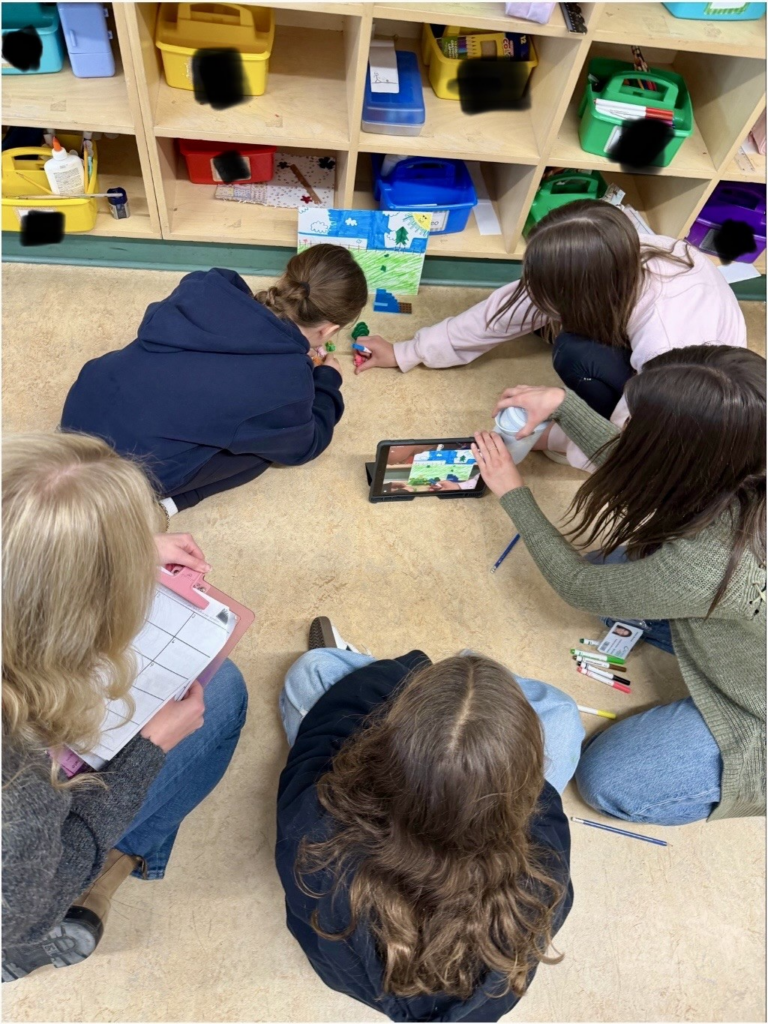
Below is a photo of our group in the process of creating our stop-motion video:
Conclusion

If I were to do this project again, I would ensure that all of the supplies were organized and readily available, such as markers, paper for backdrops and a variety of objects, toys and figures for students to use. I would also provide additional equipment, such as a tripod, so students could be as creative as they wanted. Both my professor and the Grade 5 teacher had a wide range of materials available and seeing how these resources supported student creativity made me realize that I would like to provide a similar environment in my own classroom.

I would also have made this a bigger project if there had been more time, possibly connecting it to the English Language Arts curriculum. For example, if it were my class, I could read a story to the whole class and have students create their favourite part of the story using stop-motion videos. Students could present their videos to the class, explaining the scene they created and why it was their favourite part of the story.

Action Plan

If I were to recreate this project with my own class, I would first have students watch a tutorial and practice using the technology with their groups so they could use it more independently and with less teacher support. Then, on the final day, I would give them an hour and a half to two hours to record and create their stop-motion video. This would give students the opportunity to take greater ownership of their learning and develop their technology skills.

I would also have students follow the same process of first writing out their storyline and then assigning roles within their groups. This helped our group stay organized and on track throughout the activity. The Grade 5 teacher explained that she intentionally created the groups based on students’ personalities and interests so that the project would run smoothly and students would work well together. This is something I would do as well in my own classroom.

All in all, this was a fun activity and I would definitely do it with my own class one day! I also learned a creative way to use technology to make learning more engaging and enjoyable for students.

Our Story

The story features Derek the Fox, Georgie the Dinosaur, Sabrina the Bird and Petunia the Pig. The story starts with everyone playing hide-and-seek, with Sabrina as the seeker. However, the story quickly takes a turn when everyone cannot find Petunia. It turns out that she decided to go on a nature walk and her friends eventually find her!

Below is the link for our final stop-motion video we created with the Grade 5 students uploaded to Seesaw:
Post 2: Incorporating Technology Into The Classroom: Learning How to Use Stop-Motion Videos

Before our in-situ experience, where we will have the opportunity to create stop-motion videos with Grade 5 students as a class, we first practiced using this technology in small groups. We used the Stop Motion Studio app to become more comfortable and confident with this type of technology before teaching it to students.

What is Stop-Motion Animation?

Similar to a flipbook, stop-motion animation creates the illusion of movement through a sequence of images. It involves photographing objects and then physically moving and manipulating them within the frame. Each frame is played in a specific sequence, creating the illusion that the objects are moving on their own. This “illusion” can be used to create or tell a story. One of my favourite spooky movies growing up was Coraline, which was created using stop-motion animation. This film was the first stop-motion feature to incorporate 3D rapid-prototyping technology, combining 3D-printed elements with traditional stop-motion techniques. This means features of the characters were designed by a computer rather than being sculpted by hand.

Below is a YouTube video explaining how to create a stop-motion film using 3D images:

Video from LAIKA Studios

Why Are Stop-Motion Videos an Effective Classroom Tool?

I think stop-motion is a great way to incorporate technology into the classroom because it teaches students how to use technology and use it to support their learning. I also think it is a great way for students to think creatively about how to make their stop-motion videos, what materials to use and what type of story they would like to tell. We did ours in groups of three or four, so creating these videos is also a great way to encourage students to collaborate.

I think stop-motion can be used to present learning across a variety of subjects in the BC curriculum. This activity also strongly connects to two of the Core Competencies:

How Will You Use This Learning In Your Future Teaching?

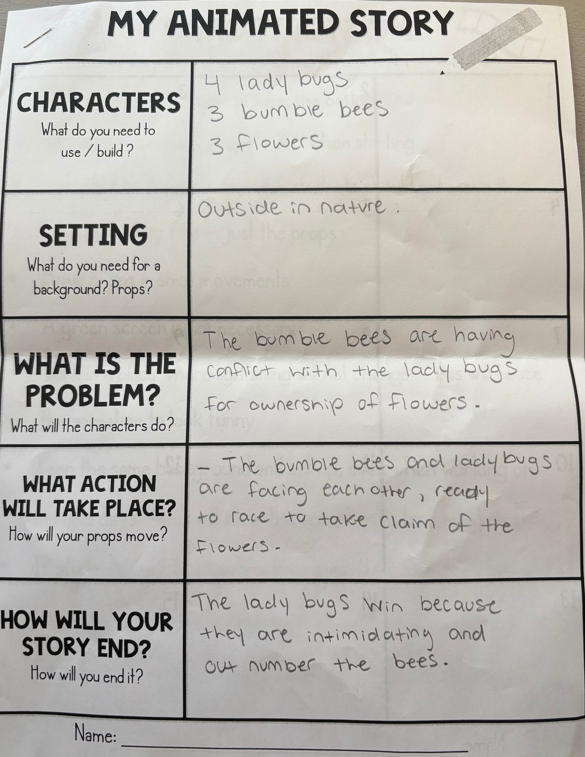
Our teacher gave us a planning sheet to use as a guide when we complete this activity with the Grade 5 students. As I looked through the sheet, I immediately thought, “This would be a great activity to connect to English Language Arts!”

Below is my worksheet I created based on the stop-motion video I made with my group:

If students are completing a novel study, they could create a stop-motion video that depicts an important part of the story. They could share their video with the class and explain why they chose that scene and why it is significant to the story. I remember when my group and I finished our stop-motion video, we wanted to do a share-out so we could watch everyone’s videos and see what they had created. This would be a great summative assessment that shows students creativity and what they learned from the novel.

Curricular CompetencyContent AreasBig Idea
Respond to text in personal and creative ways.Oral language strategies.Language and text can be a source of creativity and joy.
Story/text- Literary elements.
Story/text- Perspective/point of view.

Reflection

I enjoyed doing this activity and getting to collaborate with my classmates. We were excited to choose from the materials that our professor provided and create a short story or event. My group and I were laughing and constantly generating new ideas to make our video more creative and engaging. We decided to add audio, including some of our own sound effects and voices, to make the video more silly and enjoyable. I had a great experience doing this activity and I cannot wait to share what I have learned and create stop-motion videos with the Grade 5 students next week!

Below is the stop-motion video my group and I created together!

Post 1: Reflection on Inquiry Based Learning

This week, we watched a film called Most Likely to Succeed (2015). The film challenges the notion of whether traditional schools are adequately preparing students for the real world. It follows students at High Tech High in the United States, a school that focuses on project-based and student-centered approaches to learning rather than traditional teaching methods such as writing papers, taking tests and learning through a lecture-based approach.

What Was Your Reaction to the Film?

This film made me think about my role as a future educator and as a former high school student. I agreed with the film’s emphasis on helping students discover their interests and using those interests to motivate learning. I also believe students should develop skills such as collaboration, critical thinking and creativity. However, I think it is equally important that students learn the curriculum and core subjects such as English, Math, Science, Social Studies and Art. Creativity can be fostered by giving students choice in how they demonstrate their learning and when appropriate, allowing them some autonomy in what they learn.

As a former high school student, I related to the girl who said, “I would rather learn how to ace the test.” I understood her perspective because she was referring to learning how to study and acquire the knowledge needed to get into college, where she would have more autonomy in choosing what she wants to learn and pursue as a career.

So What? Why Does This Matter?

What I find important is helping students succeed within the current education system while also preparing them for life beyond school such as fostering creativity, critical thinking and social skills. I am concerned with finding a middle ground between having a student-centered classroom and a teacher led classroom.

How Do I Achieve This as an Educator?

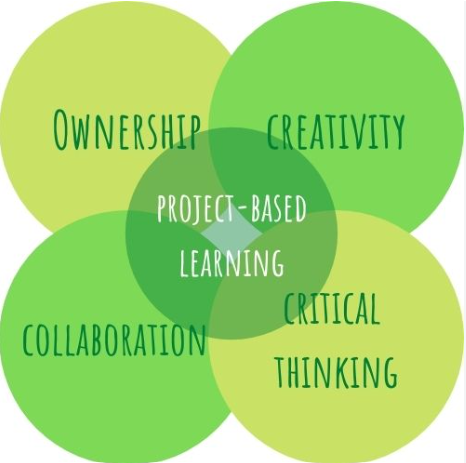
Image from: https://atutor.ca/pros-and-cons-of-project-based-learning/

  1. Project-Based Learning: Students develop knowledge and skills while working to solve a problem, answer a complex question, or investigate a real-world issue that is outline in the curriculum. Rather than demonstrating their learning through tests, students can showcase their understanding in a variety of ways, such as presentations, dioramas, videos, podcasts, posters, debates, research projects, performances, or digital portfolios. These alternative assessments allow students to apply their learning creatively while developing important skills such as communication, collaboration, critical thinking and problem-solving while learning the curriculum.
  2. Social Studies Curriculum: I learned very quickly that the Social Studies curriculum is very broad and I only recently learned why. The BC Social Studies curriculum allows for flexible teaching and learning because it has “fewer and broader required topics allows more time for teachers to engage in hands-on learning and inquiry activities rather than having to focus on covering a long list of required content.” Instead of simply memorizing dates and historical facts, students focus on exploring topics that interest them, while answering open-ended questions, engaging in debates and discussions about historical and contemporary issues. Students will learn how to critically think and come up with their own solutions to problems. This approach encourages deeper thinking and helps students make meaningful connections to their learning.
  3. The Everyday Use and Math and English: In our daily lives, we face numerical and literacy-related challenges. Math is important because it allows us to take complex problems and break them down into simpler steps. For example, when creating a budget, you can sort your income, expenses and extra spending money. English is important for understanding, learning and communicating. Therefore, it is important for educators to teach the Math and English curriculum. It is important for educators to make this learning more engaging by using manipulatives in math and helping students apply what they learn to real-world situations when teaching core subjects.