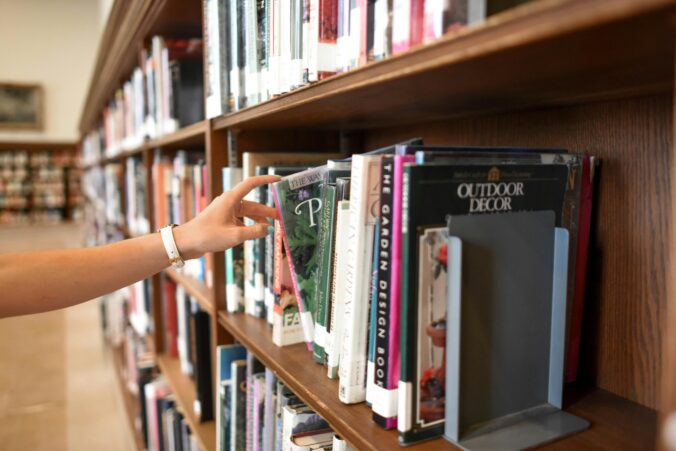
It is important to build a diverse classroom library because students will be more interested in reading. A diverse library includes books that match all students’ reading levels and interests, especially for striving readers and those who may not have ample access to books at home (Harvey & Ward, 2017). Diverse classroom libraries will also have books that educate students on relevant topics such as environment, Indigenous perspectives, 2SLGBTQIA+ identities and books written by BIPOC authors. These types of texts promote representation, foster empathy and broaden students’ understanding of the world and will help create an inclusive learning environment.
Indigenous Stories and Perspectives
A step toward reconciliation is teaching students about Indigenous culture, language and practices by introducing these concepts in meaningful ways and giving them opportunities to actively engage with them. One of the most important steps toward reconciliation is ensuring that students, even as early as Grade 1, understand that Indigenous peoples in our country have experienced serious injustices and hardships in the past (Gear, 2024). As teachers, it is our job as teachers “to do better to decolonize and indigenize our curriculum,” (Gear, 2024, p. 143). Otherwise, there will be no steps toward reconciliation. One of the first steps is to explain why Indigenous languages and cultural practices have declined over time; one significant reason for this was the residential school system.
- When I Was Eight – Christy Jordan-Fenton & Margaret Olemaun Pokiak-Fenton, illustrations by Gabrielle Grimard.
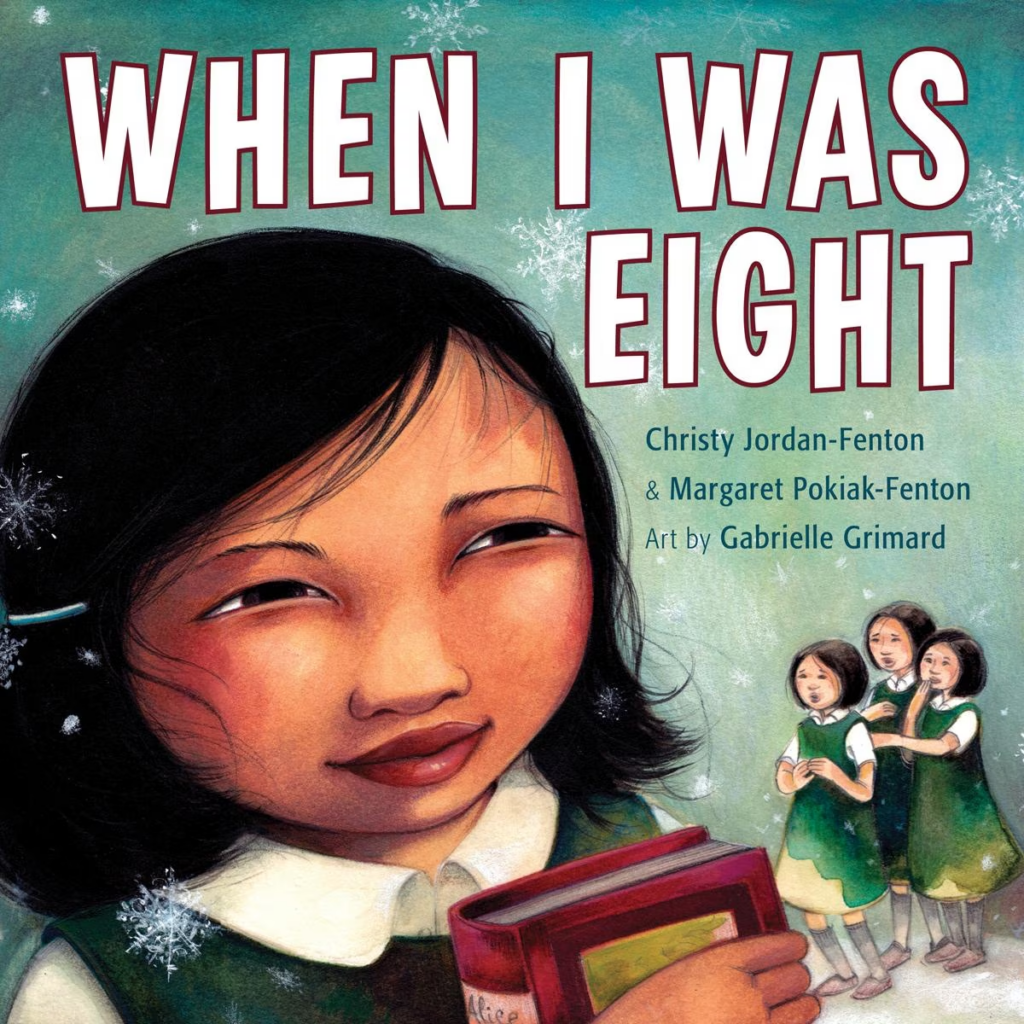
Book cover from: https://www.indigo.ca/en-ca/when-i-was-eight/9781554514915.html
This book is based on the true story of author Margaret Olemaun Pokiak-Fenton and her experience attending a residential school. It presents an honest portrayal of her story, written for younger readers to help them understand the hardships and challenges that young Indigenous children faced. For example, the book illustrates the loss of identity when she was forced to leave her community: the nuns cut her long hair and called her Margaret instead of her Inuit name. I wanted to mention this book because I recently discovered it in my philosophy class and thought it would be an educational read for young learners.
Indigenous Stories and Perspectives Continued..
In her article “Putting First Nations Texts at the Center,” Roxanne Harde explains that children’s literature shapes students’ understanding and identity. Therefore, school libraries should include authentic books about Indigenous peoples and cultures that avoid colonial stereotypes. Schools should prioritize texts written by Indigenous authors because centering Indigenous voices helps promote accurate representation and deeper understanding for all students. Indigenous texts are one method we can use in our roles as teachers to commit to reconciliation and to teach our students what this means.
- On the Trapline – David A. Robertson Illustrations by Julie Flett
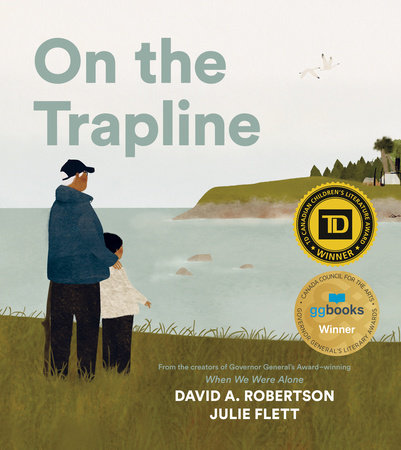
Book cover from: https://www.penguinrandomhouse.ca/books/609013/on-the-trapline-by-david-a-robertson-illustrated-by-julie-flett/9780735266681
This book is a great read for teaching students some Swampy Cree language words and helping them learn more about Indigenous culture and values. The story follows a young boy and his Grandpa, Moshom, as they visit the family trapline where his grandpa grew up. The young boy learns that a trapline is a place where people hunt and live off the land.
Throughout the visit, he experiences what it is like to live on the land, speak his traditional language, learn about hunting wild animals and eat foods such as berries, bannock and wild meat. In doing so, he gains a deeper understanding of the way his Grandpa grew up through telling memories and sharing intergenerational knowledge.
David A. Robertson is a Canadian author and a member of the Norway House Cree Nation and Julie Flett is a Cree-Métis author and illustrator. Therefore, this book offers an authentic representation of how some Cree Indigenous people lived and the language they spoke.
2SLGBTQIA+ Identities
On the website The Walrus, book censorship is described as “in which books are called upon to justify their existence through demonstrations of their moral value.” This means that literature, especially children’s literature, must “prove” that it is worthwhile or teaches important lessons. Everyone has their own definition of what is worthy of being taught, particularly when it comes to morals, values and social or cultural beliefs.
The Walrus also explains that book banners continue to target stories about people of colour, especially those addressing racism and 2SLGBTQIA+ individuals. This is both overwhelming and upsetting because, as discussed earlier in this blog post, it is important for students to feel that they can express themselves and see their identities reflected in the books they read. Books about inclusivity and diversity are a great example of teaching students to show respect and kindness toward themselves and others in meaningful ways. One of my new favourite authors is Elise Gravel. Her literature is about emotions, identity, acceptance and kindness.
- Pink, Blue, and You! – Elise Gravel and Mykaell Blais.
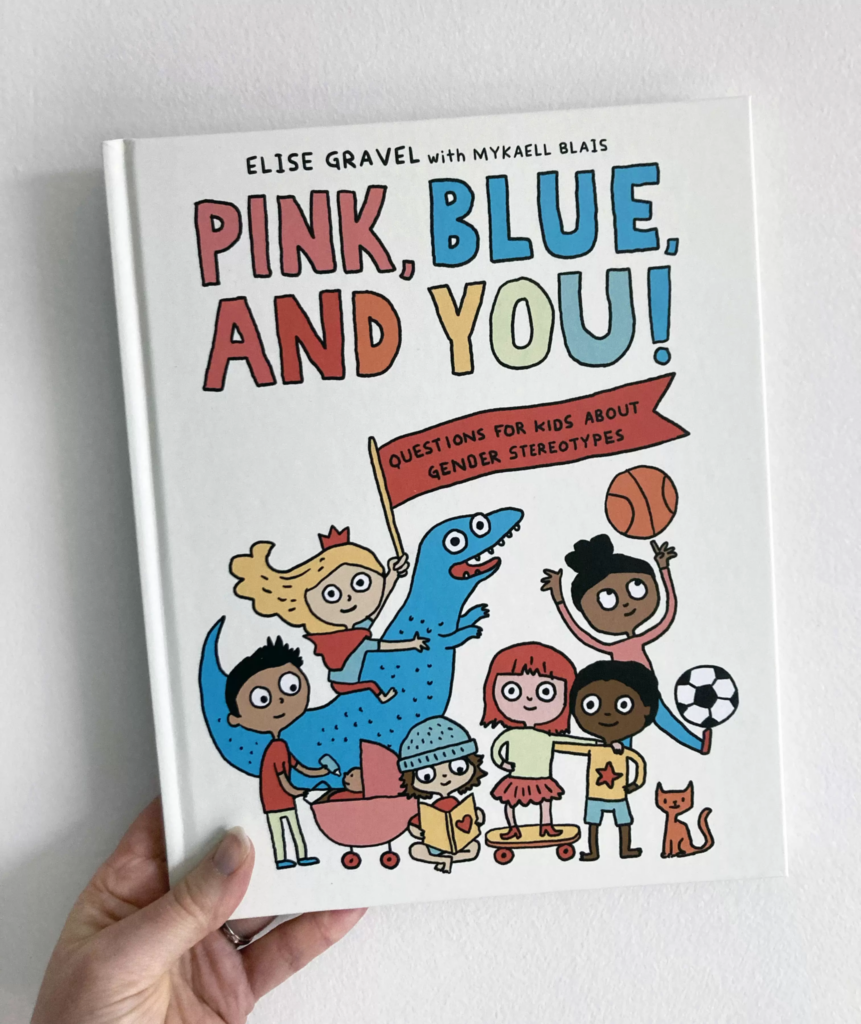
Book cover from: https://elisegravel.com/en/blog/pink-blue-and-you-my-new-book-is-in-stores-today/
This book has not been subject to a widespread, nationwide ban in Canada. However, there have been calls to remove it from Canadian libraries and schools. The book promotes love, kindness, acceptance and support for individuals in embracing their gender identity and bodies, encouraging them not to feel pushed away or hidden. This is a great read for students who have questions about gender stereotypes.
Pink Shirt Day
Pink Shirt Day is an annual anti-bullying event held in Canada every year on February 25. It began in 2007 when two Grade 12 students, David Shepherd and Travis Price, gave out pink shirts to their classmates after a ninth-grade student, Chuck McNeill, was bullied for wearing a pink shirt on the first day of school.
It is important to educate students on how pink shirt day began and why. When I visited the Grade 2 class for literacy stations in February, they were learning and discussing about kindness. Ways to support anti-bullying is reading literature about kindness, encouraging students to wear a pink shirt, through reflection activities and classroom discussions.
For all grades, the class could come together and create a kindness tree. A large paper cut-out of a tree could be pasted on the classroom wall where students write on paper leaves or apples acts of kindness and positive messages.
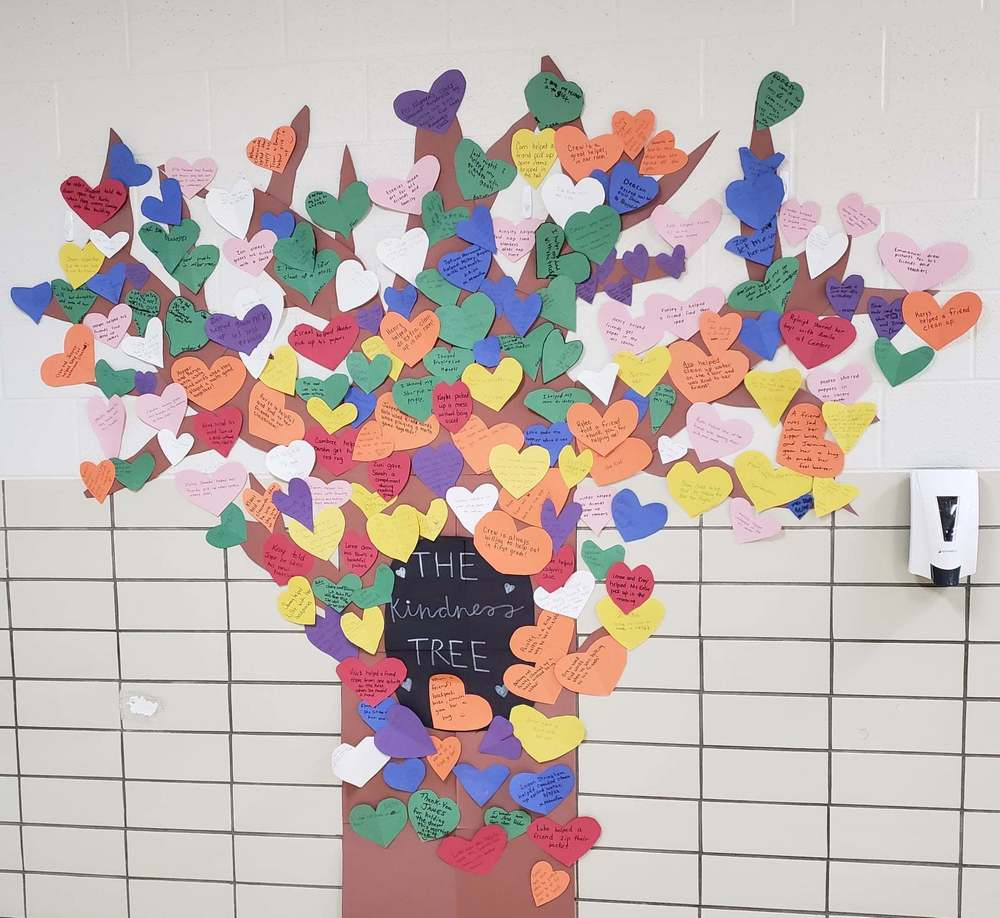
Image retrieved from: https://www.acgcschools.org/o/gc-elementary/article/687492
Literature that Stands for Anti-Bullying
- It’s My Brain! – Elise Gravel
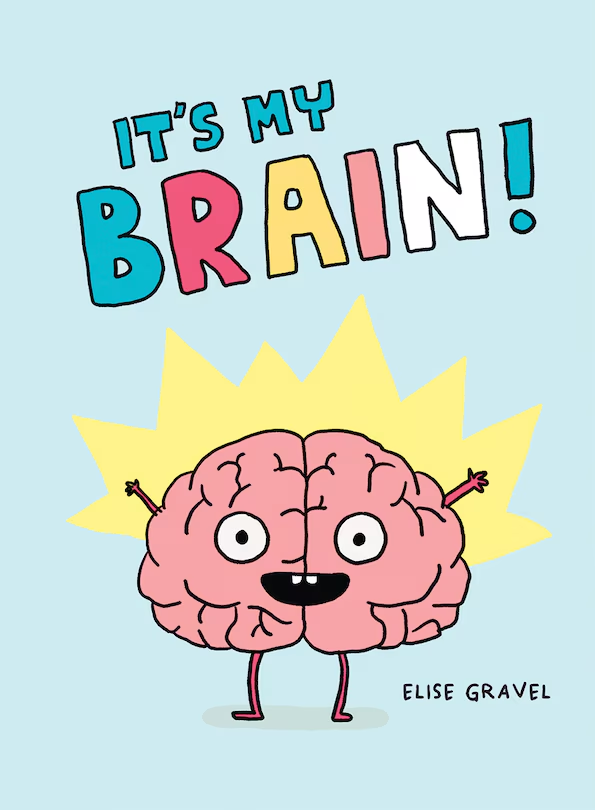
Book cover from: https://www.indigo.ca/en-ca/its-my-brain/9781039710092.html
This book celebrates diversity and that everyone feels, thinks and learns in different ways, which is what makes individuals and the classroom special! This book highlights that being different is something that should be celebrated.
- Have You Filled a Bucket Today? – Carol McCloud Illustrated by David Messing
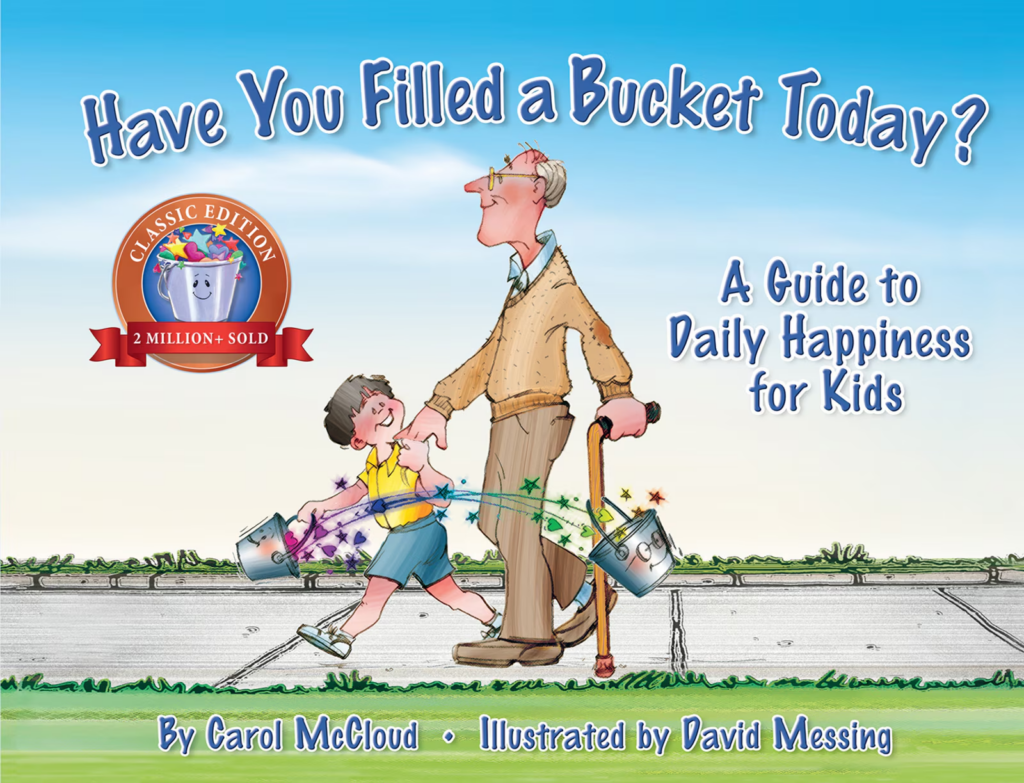
Book cover from: https://www.indigo.ca/en-ca/have-you-filled-a-bucket-today-a-guide-to-daily-happiness-for-kids/9780996099936.html
I remember when I was in elementary school my teacher read to my class Have You Filled a Bucket Today? This book teaches students about how being kind to people “fills their bucket” and how it feels when your bucket is filled through love, kindness, empathy and respect. When people are unkind or bully others it can affect their mental health and emotional-wellbeing.
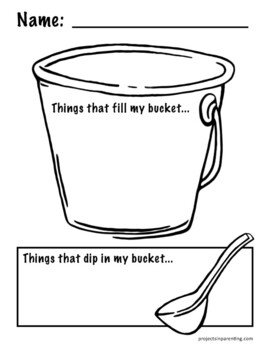
Image retrieved from: https://www.teacherspayteachers.com/browse/free?search=have%20you%20filled%20a%20bucket%20today
Students can do activities that help them reflect when they have been kind to others and how to show kindness to themselves.
Resources:
Gear, A. (2024). Powerful Thinking: Engaging Readers, Building Knowledge and Nudging Learning in Elementary Classrooms. Pembroke Publishers.
Harde, R. (2016). Putting First Nations Texts at the Center. Bookbird, 54(1), 4–9. https://doi.org/10.1353/bkb.2016.0019
Harvey, S., & Ward, A. (2017). Striving to Thriving: How to Grow Confident, Capable Readers. Scholastic.
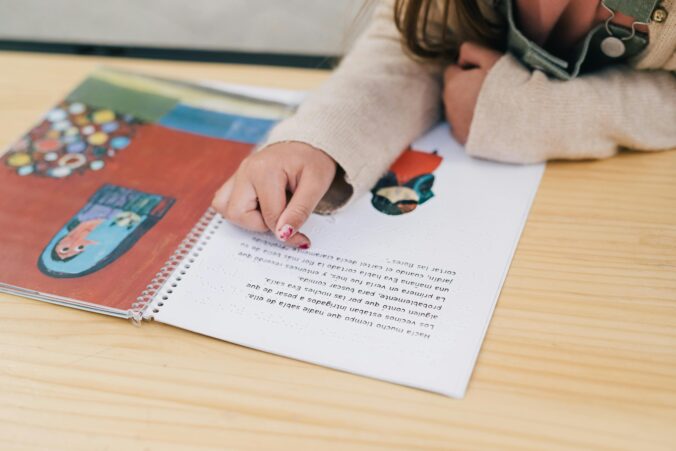
I recently had the opportunity to have an in-situ experience doing literacy stations at a local elementary school in a Grade 2 class. The two activities that I had prepared were a crossword and fill-in-the-blank activities that were associated with the concept kindness. I heard that they were reviewing concepts about kindness in their class and wanted to do activities that connected with what they were currently learning.
Crossword!
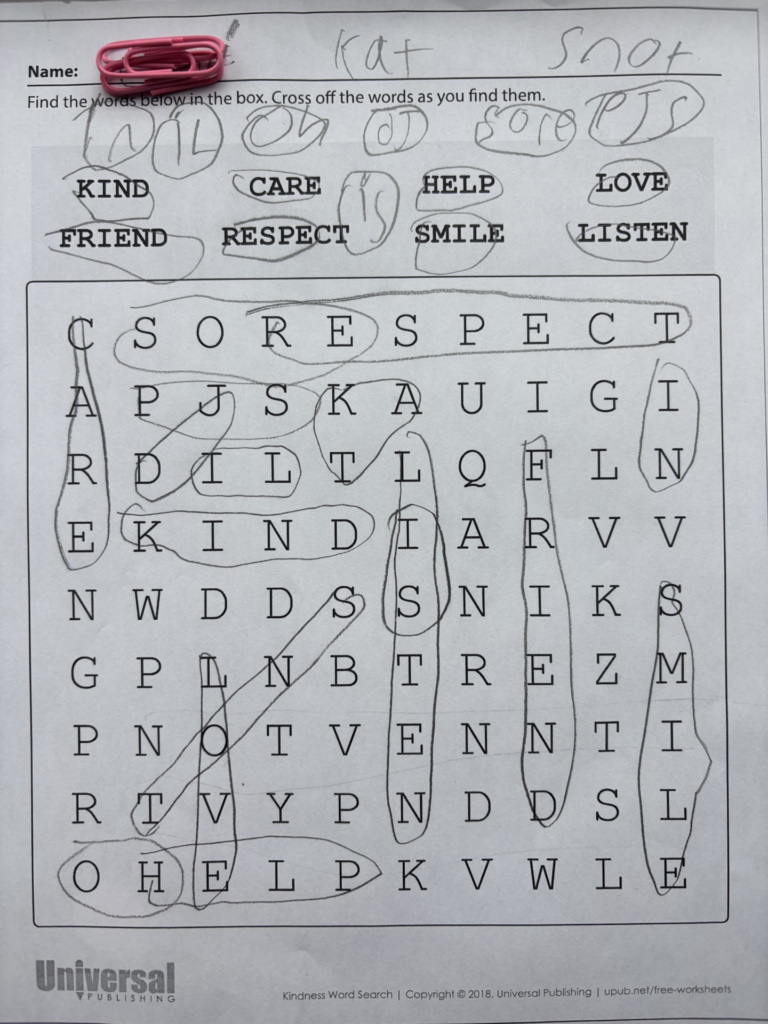
For each station there were about three to four students, which gave me more of an opportunity to get to know the students and help them if needed. Students were asked to try to do both activities on their own, but to ask a friend if they needed help. The students were so helpful when their classmates needed guidance (which was refreshing to see since they were learning about kindness). This activity would connect to British Columbia’s Curriculum under:
- Big Idea: Language and story can be a source of creativity and joy. Students typically enjoy and have fun doing crosswords because it can challenge them, but they also get excited when they find a word.
- Comprehend and Connect: Students are also using their prior knowledge about kindness to further their learning. For example, I asked the students what they do to show kindness to others or themselves and one student said “brush their teeth.” I thought this was a great example of how to show kindness to yourself, by taking care of yourself.
Fill in the Blank!
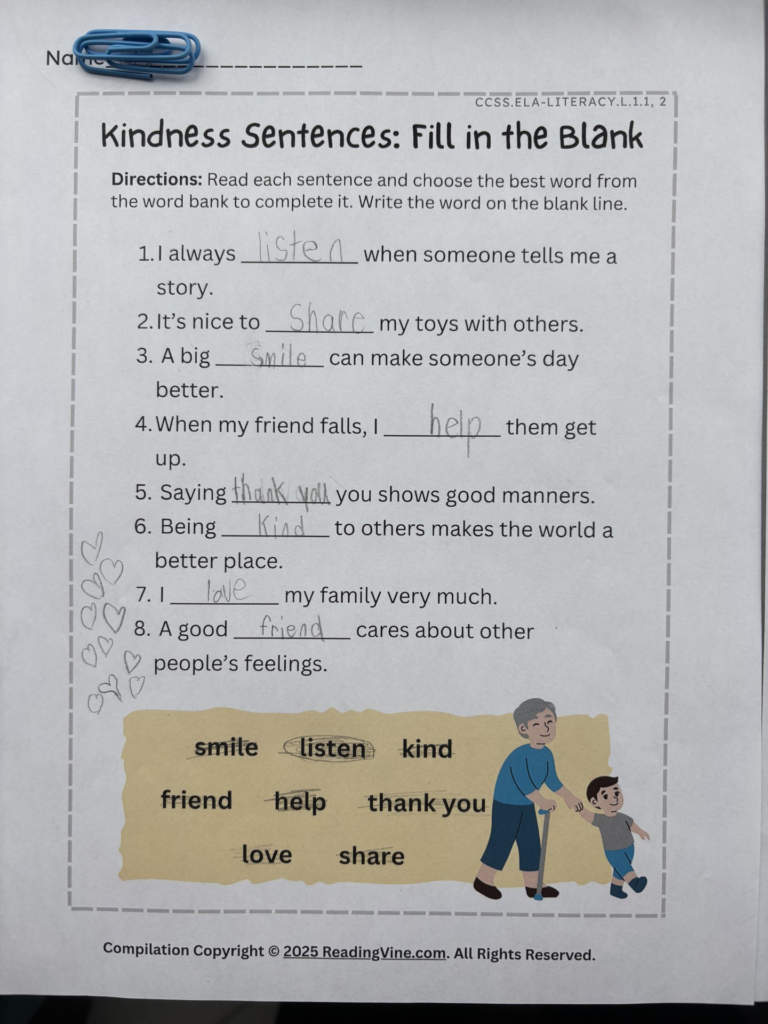
The fill-in-the-blank activity also connected to their learning about kindness. This activity was particularly interesting because I was able to get a sense of where the students were in their reading development. Most students were able to read the sentence and correctly fill in the blank independently. For some students, I needed to provide a bit more guidance, such as reminding them to read the whole sentence first and then try adding the words provided at the bottom of the page to see if they sounded correct. This activity was also an effective way to assess where the Grade 2 students were in terms of reading comprehension in a fun way and they did very well. Most students said they enjoyed the activity and felt that it was easy. This activity would connect to British Columbia’s Curriculum under:
- Comprehend and Connect: Students are using developmentally appropriate reading, listening and viewing strategies to make meaning. Students are reading the sentence, listening to hear if it matches appropriately with their sentence and writing it down.
Reflection:
Overall, this was an amazing and fun experience. I was happy to hear that the students enjoyed the activities and were engaged. What I learned from this experience and in my classes in this program is the importance of stations and hands-on learning. In some of my classmates’ stations, I noticed students were using dice, working in groups to solve word problems and were sorting. Doing different math and literacy stations where students try different activities with different outcomes and learning intentions enriches their learning.
Connections to Classroom Readings:
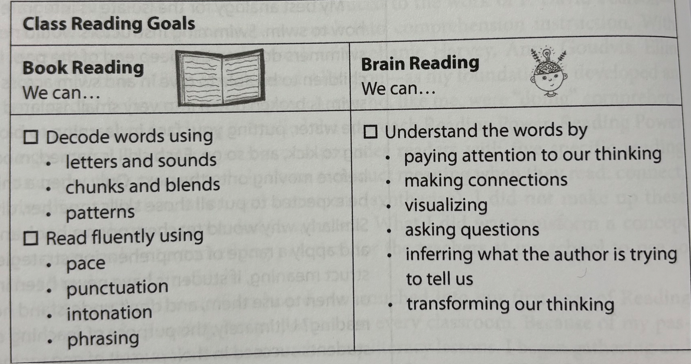
Image retrieved from: Powerful Thinking
The fill-in-the-blank activity supported the concept of Brain Reading. Students were required to make connections by using their prior knowledge about kindness, paying attention to their thinking by ensuring the answers made sense to the sentence written and engaged in meaningful discussion about kindness to transform their thinking.
The crossword activity was more directed towards Book Reading. Students decode words using letters and sounds to help them remember what word they are looking for. Students must look carefully for letter patterns, blends and chunks to identify words.
Resources:
Gear, A. (2024). Powerful thinking: Engaging Readers, Building knowledge, and Nudging Learning in Elementary Classrooms. Pembroke Publishers.
https://curriculum.gov.bc.ca/curriculum/english-language-arts/2/core
Novel Study:
On February 10th, 2026 by Lindsay Andersen – EDCI 402 Reading Instructional Principles and Strategies. Good Reads Assignment
The following PDF is my grade four novel study, co-created with Eva Sommerfeld
Novel Study – Charlie and The Chocolate Factory
Three Picture Books:
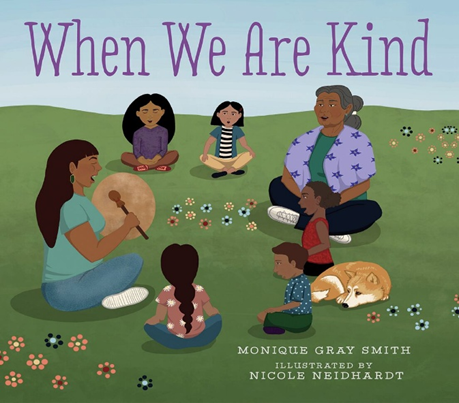
Retrieved from: https://www.cbc.ca/books/when-we-are-kind-1.5735632
Book Title: When We Are Kind
Author: Monique Gray Smith
- Indigenous
- Canadian
- Queer
Book Illustrator: Nicole Neidhardt
- Indigenous
- Canadian roots (received her Bachelor of Fine Arts Degree from University of Victoria).
- Queer
Book Type: Fictional children’s picture book.
Grade Level(s): Kindergarten to grade two.
Topics: This is a book about social emotional learning focusing on themes about being kind, empathetic and is about community.
Subjects: This book is about simple acts of kindness. This book celebrates simple acts of kindness towards us, our neighbors and the environment. The book highlights emotions that come with being kind such as joy, happiness, comfort and love when we initiate or receive kindness. This book highlights Indigenous culture such as being interconnected with nature by giving and receiving kindness to the land.
Curricular Content/Competencies: Looking at the kindergarten English curricular competencies, this book would fall under ‘comprehend’ and ‘connect.’ More specifically, “Use sources of information and prior knowledge to make meaning,” (BC Curriculum, n.d.). Students will do an activity after reading the book where they will write something they have done to show kindness or an act of kindness someone has done for them. This is an example of them sharing personal stories and experiences connected with the reading. This book would also fall under ‘create’ and ‘communicate’ curricular competency. This lines up with “Exchange ideas and perspectives to build shared understanding,” because students will be actively listening to the story, (BC Curriculum, n.d.). They will also be taking turns offering ideas related to the topic of being kind. Students can share how they show kindness to their friends, family, themselves and the natural environment in whole-class discussion. This lesson can be cross curricular with a connection to kindergarten science. There is an environmental conservation theme in the book, students can draw connections to plants and animals and what they need to survive in the natural environment.
Book Summary: When We Are Kind, written by Monique Gray Smith, illustrated by Nicole Neidhardt, is about what everyday kindness looks like, such as what it looks like to receive kindness from those in your inner circle and community. It is a story about celebrating simple acts of everyday kindness. Examples in the text include “I feel joy when my family and I are kind,” and “I am kind when I only take from the Earth what I need.” There are themes of empathy and caring for the environment. This book reflects Indigenous culture using illustrations of Indigenous families and children. The book also discusses caring for the environment. Indigenous culture has a reciprocal and spiritual relationship with nature.
Book Activity: This activity is fit for kindergarten to grade two. The teacher hands out a heart-shaped paper to each student and they will write something they have done to show kindness or an act of kindness someone has done for them. Once they have finished, they fold their heart in half and place it in a mason jar. Once all the students have written their own paper, the teacher will anonymously draw out a heart and read what it says in front of the whole class. This activity would take some time because young students may need inspiration about what to write about and spelling words correctly. In kindergarten, if students are struggling with writing words or have not yet learned all the letters in the alphabet, this activity can be done as a whole class. The teacher would have students raise their hands and share ideas, then the teacher would write on a paper heart as ideas were said. Then, the teacher would have each student come up to the front of the classroom and glue one heart to a blank piece of paper, where it would be displayed.
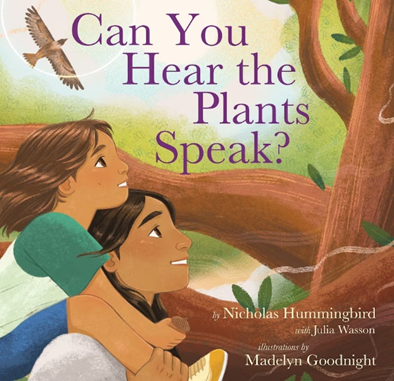
Book retrieved from: https://www.indigo.ca/en-ca/can-you-hear-the-plants-speak/9780063221284.html
Book Title: Can You Hear the Plants Speak?
Author(s): Nicholas Hummingbird and Julia Wasson
- Indigenous
- BIPOC
Book Illustrator: Madelyn Goodnight
- BIPOC
Book Type: Non-fiction environmental education picture book.
Grade Level(s): Kindergarten to grade three.
Topics: This is a book about environmental education and protecting the environment. More specifically, it focuses on the topic of Indigenous traditional and ecological knowledge about the belief that plants and nature are alive. Indigenous people’s have kinship and a reciprocal relationship with nature that is valuable. Overall, this book covers topics such as family, conservation of the environment and understanding nature, including humans affects on nature.
Subjects: This reading emphasizes Indigenous cultural concepts of nature. The book provides young learners with knowledge about how Indigenous connections to land are affected by government systems, including pipelines, forestry, hunting and as the book highlights, construction. In traditional ecological knowledge, there is spirit in everything, especially the land, which is alive just like humans. Therefore, we need to conserve and protect nature. Our relationship with nature is reciprocal. When we give to the land by not taking too much and taking care of it, the land says “thank you” by providing us with plants that grow, clean rivers and increasing animal species. This book includes information about biology and plant cycles. Therefore, this book focuses on subjects such as Indigenous knowledge and science.
Curricular Content/Competencies: This reading would connect to kindergarten science. It would fall under content learning standards “basic needs of plants and animals,” (BC Curriculum, n.d.). Students will learn the basic needs of plants when they plant their seed in soil that grows with sunlight and water. This connects to the part in the story of the plant that is growing in the city of big buildings, traffic and pollution. The book explains a bit about plant lifecycles making a connection to the subject of biology. It would fall under curricular competency ‘questioning’ and ‘predicting.’ Once students plant their seed, they will look for patterns in plant growth, questioning these patterns and making connections such as “how do these patterns explain plant growth in your local environment?” (BC Curriculum, n.d.). This book is cross curricular because it aligns with curricular competency ‘create’ and ‘communicate,’ for kindergarten English. Under this curricular competency it explains that students “Create stories and other texts to deepen awareness of self, family, and community,” (BC Curriculum, n.d.). This book teaches students that narrative text can teach us about ourselves, human nature and motivation (motivation to protect the environment).
Book Summary: The book is about a little boy who shares his stories about how there is spirit in nature. He spends his summer days with his great-grandparents exploring the rocks, plants and creeks where he lives. He listens to plants as they speak and explores his connection to the spirit of the natural world. He realizes that not everyone listens when the plants speak, which is why people tear up the land to build houses, shopping malls and other buildings, driven by capitalization. We listen to the land, but when we commit these acts, the land is silenced. The boy grew, but his great-grandparents passed away. He still carries the knowledge that they gave him, which is that he should listen to nature. He listened and learned, growing new plants with care, giving them to his family as a gift. He started to give back to nature and when plants flourish, it is their way of saying “thank you.”
Book Activity:
In kindergarten science, students learn content such as the basic needs of plants learning about plants habitats, food, water and shelter. Students can learn about all these factors that affect plant cycles while planting their own seeds in soil watching them grow. Students can discuss observations and draw conclusions about plant cycles.
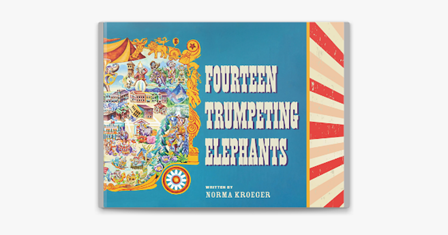
Retrieved from: https://books.apple.com/us/book/fourteen-trumpeting-elephants/id1488825302
Book Title: Fourteen Trumpeting Elephants
Author: Norma Kroeger
- Canadian local author.
Illustrator(s): Local artists near Cranbrook, British Columbia and students from Gordon Terrace Elementary School.
Book Type: Historical fiction children’s picture book.
Grade Level(s): Grade two to grade six.
Topics: This book shares different fictional stories of what Charlie Ed was doing during the time the searchers were trying to find him. The main topics of this reading are imagination, adventure, mystery and exploration of the natural environment.
Subjects: This book was inspired by the true story of elephants that escaped from the Sells Floto Circus in Cranbrook, British Columbia, in 1926. Due to this book being based on a real historical event, the book connects closely to the subject of history. The story also shares descriptions of different places that Charlie Ed travels to, such as swimming in the Moyie River. In addition, a man in the story describes traveling around the world and explains that the elephant is an Indian elephant from Asia. He also mentions seeing many beautiful elephants while exploring Thailand. These details connect the book to the subject of geography, which is taught in social studies.
Curricular Content/Competencies: This reading could be tied to grade six social studies. Could be a transition into historical events that occurred in the 1920s to the 1930s. This book, considering its timeline, could connect to content learning standards “Global poverty and inequality issues, including class structure and gender,” (BC Curriculum, n.d.). Some global events that occurred around this timeline was the beginning of the Holocaust in the 1930s, the Great Depression in the 1930s and under the topic of Chinese immigration stated on the BC Curriculum website students could learn about the Chinese Immigration Act in 1923, banning Chinese immigration. These events in history would fall under historical acts of racism and inequality. These topics could fall under curricular competency: “Differentiate between short- and long-term causes and intended and unintended consequences, of events, decisions, or developments,” (BC Curriculum, n.d.). Students can reflect on how these historical events have shaped our world. They could also reflect on their own actions and the consequences in their own lives. This can also be cross curricular, connecting to Grade six English curricular competency ‘create’ and ‘communicate’ where students can take what they have learned about events in history and show what they learned through meaningful and informational texts that can be shared with the class.
Book Summary: This is a story about a boy named Cody and his friends, Dustin and Julian who listen to Cody’s grandpa tell stories. Cody’s grandpa was telling stories passed down from his Uncle Will who was 14 years old that summer when Sells Floto Circus was in Cranbrook in 1926. One of the stories Cody’s grandpa told was about that one hot summer day in 1926 when the circus had arrived in Cranbrook, BC. Animals that were part of the circus were lions, dogs, horses, but most importantly, the elephants. The way it was heard was that a dog was barking at a rabbit that went under the elephant car. This startled the elephants and caused a “fight” or “flight” response, which flight is what the elephants choose. Almost all the elephants were found except for one, Charlie Ed. During the time Ktunaxa Elders and other searchers were trying to find Charlie Ed he was eating huckleberries from a big field, ate apples from an apple tree, protected a family from a big bear, helped crown the winner of the Cranbrook Gyro Club Auto Contest and more! Well, these were stories that people in the community shared of what they thought Charlie Ed was doing while he was being searched for.
Book Activity: With primary students, they could draw a picture and write their own version of what they think Charlie Ed was doing and where he could have been. This gives students to think creatively and be creative with their drawings. With a grade six class, this could tie into doing a research project about a historical event that occurred between the 1920’s to the 1930’s that would tie into the subject of social studies. Students could conduct research and be the experts on a global historical event that they would present as either a presentation, video, poster or other forms of representation. Students can share this information with the whole class.
Resources:
British Columbia Ministry of Education. (n.d.). Curriculum: Building Student Success. https://curriculum.gov.bc.ca/
Gould, R. K. (2023). Bridging Cultural Concepts of Nature: Indigenous People and Protected Spaces of Nature Bridging Cultural Concepts of Nature. Society & Natural Resources, 36(10), 1298–1300. https://doi.org/10.1080/08941920.2023.2183535

Class Reflection on Teaching “The Wolves in the Walls” Using Virtual Reality (VR) and Lesson Overview:
As a class, we had the opportunity to participate in an in-situ experience at a local elementary school, where we read literature and used VR with a Grade 5/6 class. First, the teacher candidates read The Wolves in the Walls by Neil Gaiman and Dave McKean to students that were in five small groups. We designated specific readers for certain sections so that students could have movement breaks throughout the story, since it is a longer read. This also helped build suspense as the story progressed. After students were read the story, we set up the VR for students to experience the story in a different way.
My Personal Experience with VR in the Design Lab:
I thought it was really interesting to use VR and see the whole story come to life. One key difference between the book and the VR version is that Lucy, the main character, narrates the story in VR, while the book is told from a third-person point of view, which I found especially interesting. The illustrations in VR were super cool and immersive, but they also created a creepy, eerie vibe that slowly built up until the wolves came out of the walls. Overall, I thought it was a really cool and educational experience.
Book Summary:
This story, The Wolves in the Walls, is about a little girl named Lucy who believes there are wolves living inside the walls of her house. She tries to explain to her family that she can hear them and is certain they are there. However, her parents do not believe her and think the noises might be mice or bats. Until one day, the wolves come out of the walls and chase Lucy and her family out of their home. The family is forced to camp outside until Lucy convinces them that they must take back what is theirs. They go into the walls of their house and successfully drive the wolves out.
Before the last group of students who had the book read to them were given a worksheet where they explored the deeper meanings of words such as sustained and brandish. Due to the classroom being crowded and the noise levels being high, many students were not able to complete much of the booklet. However, some students were able to finish it, reflecting on their experience by drawing pictures and writing sentences in the booklet.
After students read the book, I was part of the group that helped students get set up with the VR. First, we explained to the students that if they felt uncomfortable, nauseous, or unsure, they needed to tell us and we would immediately stop the VR. We explained that we would help set them up with the headset and that if it felt uncomfortable or did not fit their head properly, they needed to let us know to avoid any discomfort or the headset falling on the ground and breaking.
Both the students using the VR set and those not using it were reminded to be respectful of their classmates’ space to avoid anyone getting surprised or hurt. Students were also told that we had created a boundary and if they stepped outside of it, they would no longer see the game but instead the classroom. At that point, we could either physically guide them back to their boundary with permission or verbally direct them to where the marker was on the floor.
Curricular Connections:
Applied Design, Skills, and Technologies – Grade 6
- Big Idea: Design can be responsive to identified needs.
= This big idea aligns with using VR because students learn that technology can be used for literature and storytelling. The shift from third-person narration in the book to first-person narration in VR demonstrates how design choices affect user experience.
- Curricular Competency: Demonstrate an awareness of precautionary and emergency safety procedures in both physical and digital environments.
= During the VR activity, students learn how to use the equipment in a respectful and safe manner. They also learn about spatial awareness and respecting their classmates’ space.
- Curricular Competency: Select, and as needed learn about, appropriate tools and technologies to extend their capability to complete a task.
= Students learn that technology can be used to enhance literary knowledge, skills and learning.
English Language Arts – Grade 6
- Big Idea: Language and text can be a source of creativity and joy.
= The VR experience enhanced engagement and excitement for students. This activity was a way to show that storytelling can evolve by using technology. In classroom practice, I have seen teachers use YouTube to tell stories and teachers telling a story using a doc cam.
- Learning Focus: Students will be able to decipher the difference between the same book being read in class and being shown using VR and how this can change their experience with the book and how they interpret the story.
Reflection:
I had an amazing time doing this activity with the Grade 5 and 6 students! They were very engaged with the VR and thought it was really cool and interesting. As Adrienne Gear mentions in her literature Powerful Thinking when students can visualize rich descriptions, locations and use their senses which in this case was sight and sound, improves reading comprehension and engagement (page 24). There were iPads set up for other students to observe their classmates in the story and we were able to keep track of where they were at or where they had left off in the story. I just wish I could have seen their comparisons and personal reflections of the book and VR experience in their booklets. Overall, this was a really fun activity and I always enjoy being in classrooms, meeting the students and working with them.
Pictures: Taken by my professor:
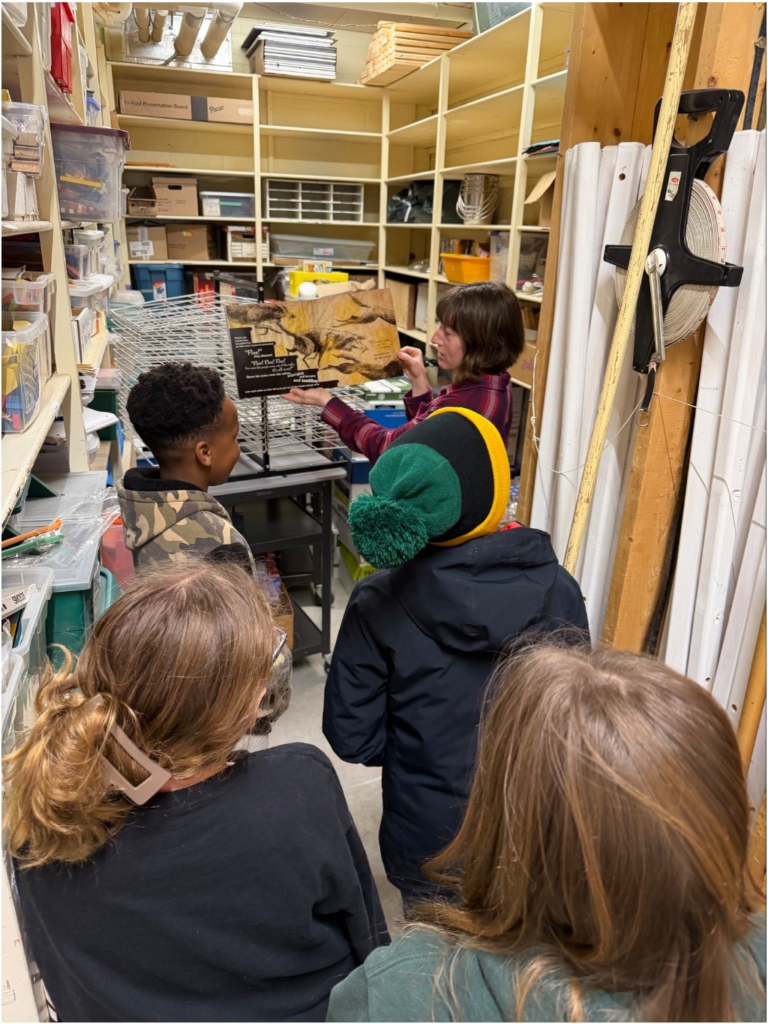
This is a photo of a teacher candidate reading The Wolves in the Walls to Grade 5/6 students.
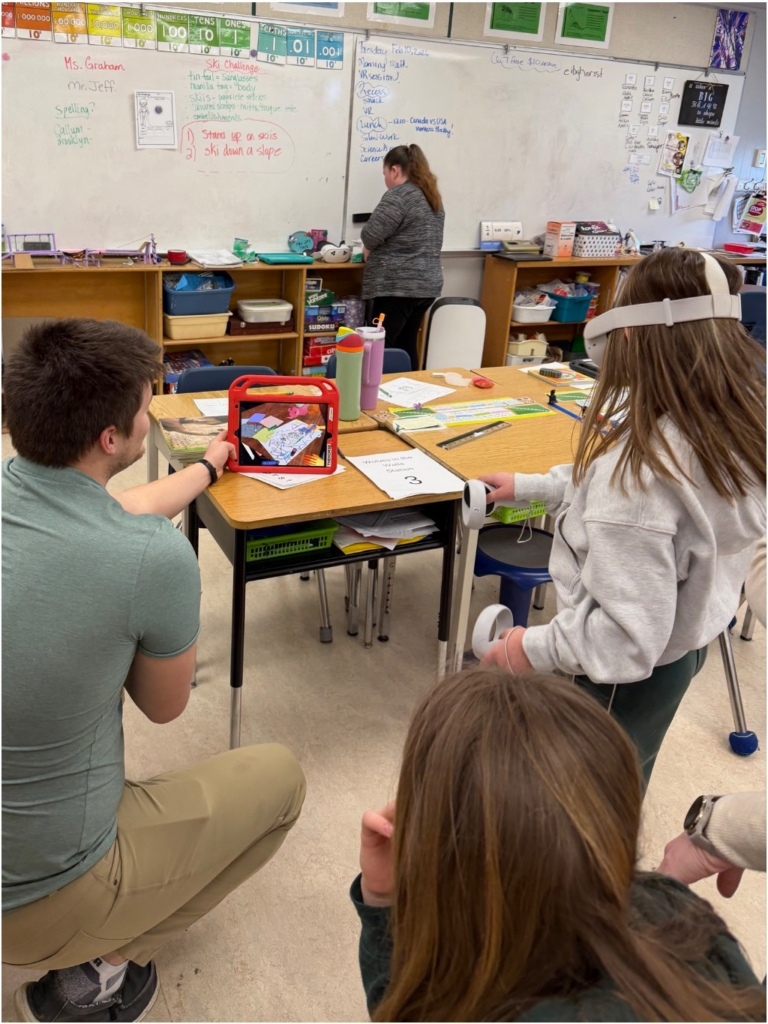
This is a photo of a teacher candidate watching a students point of view in the story using an iPad.
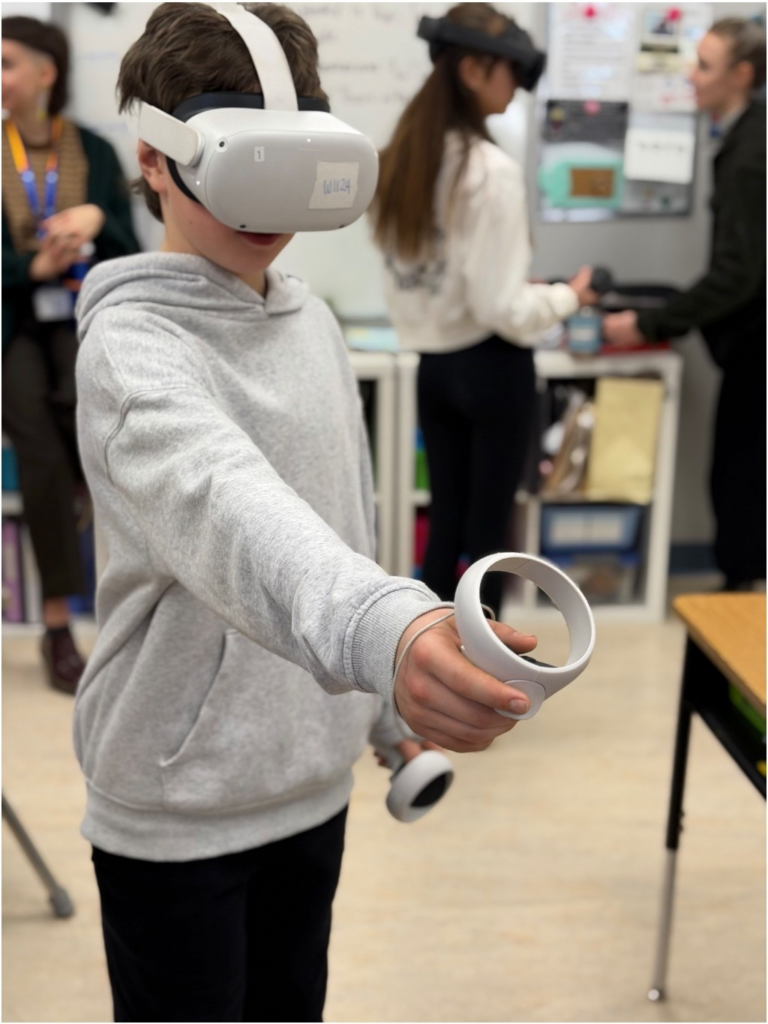
This is a photo of a student experiencing the story using VR.
Resources:
Gear, A. (2024). Powerful Thinking: Engaging Readers, Building Knowledge, and Nudging Learning in Elementary Classrooms. Pembroke Publishers.
The book I read to the Kindergarten class was If You Laugh, I’m Starting This Book Over by Chris Harris. This is a funny book that challenges listeners not to laugh. With humorous illustrations, goofy phrases and silly names throughout the text, students find it impossible to resist laughing!
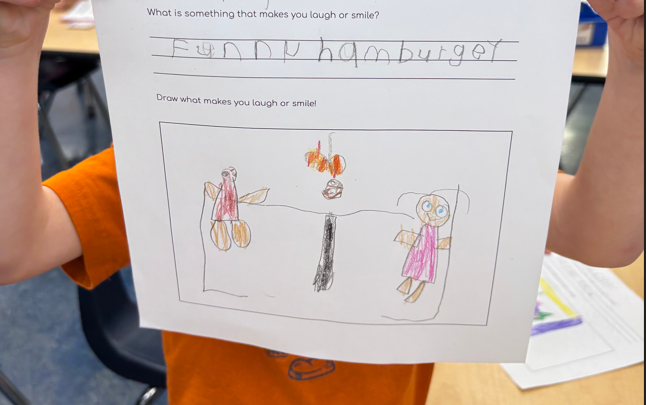
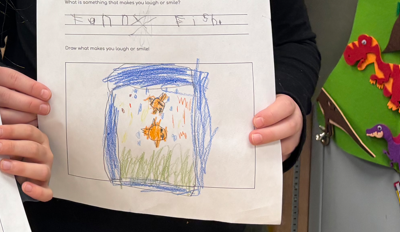
After the book was read, students participated in an activity where they wrote about something that makes them laugh or smile or could write something from the book that was funny. They then drew and coloured a picture based on what they wrote. With the support of two educational assistants (EAs) and the teachers’ help, the activity went very well. Students were able to write a full phrase or sentence about something they thought was funny or a part of the book they found amusing, with guided support. If a student could verbally express a phrase, the EA would write it on a small whiteboard and the student would copy it onto their paper.
If a Kindergarten class did not have this level of support in the classroom, I would have conducted the writing activity as a whole-class exercise. Students could have verbally shared what they found funny and we would focus on a drawing activity instead, taking into account that Kindergarten students are still developing their writing skills.

Image retrieved from: https://dcmp.org/media/19266-if-you-laugh-i-m-starting-this-book-over
Here are the prompts:
EVALUATE
Background Knowledge:
I read this book to a Kindergarten class where students were already beginning to write words and knew most alphabet letters. With this in mind, I planned an activity that would challenge them while still being fun and engaging. By combining writing and drawing, I aimed to support their emerging literacy skills while giving them room for creativity and self-expression.
Funds of Knowledge:
This book does not tie into the culture or socio-economic status of students. It focuses on the students’ sense of humor and whether they will find the text funny. It was also a way to test if students would find it amusing, as I was unsure due to their age. The humor largely depends on how the book is read, including tone of voice and facial expressions, which the students found hilarious when I read the book to them.
Potential Stumbling Blocks:
Given the students are in Kindergarten, the potential stumbling blocks for this activity may include concepts or vocabulary that are new to some learners. Students knew how to write the letters of the alphabet, but they struggled when writing words. This is when students learn about decoding. From Sometimes Reading is Hard, explains structured teaching approaches to teaching decoding that are important. For example, programs such as UFLI and Heggerty teach phonology skills and how to decode words (Bright, 2021). Students focus on sounds and letters of language by using techniques such as rhyming, blending words, breaking words into sounds, clapping syllables and learning “heart” words such as the, to, of, are, was, you and more (Bright, 2021).
Instructional Opportunities:
After the reading, students demonstrated emerging independence by writing their own names at the top of the page. For the writing portion, the EAs supported students by writing their spoken sentences on whiteboards for the students to copy. This activity provided instructional opportunities to observe letter formation, word writing and spacing, while also allowing students to express their creativity. For example, drawings differed such as a “silly hamburger” or a vibrant sunset that made a student smile.
EXPLAIN
Brainstorm Unfamiliar Words:
| Words to Teach | Short, Simple, Straightforward Definitions | Words to Explain | Short, Simple, Straightforward Definitions |
| One million dollars | “An enormous amount of money, much more than we can count.” | Rules | “Things that we are supposed to follow. When a student is asked to follow a rule, they do it.” |
| Serious | “Serious means your body and face are calm.” “You can be serious when you are focusing.” “You are serious when something is not funny.” “When you are telling someone something important or when someone is telling something important to you.” | Chicken McStinkbreath Eyeball | “This is a silly made-up name that is supposed to make you giggle because it is so ridiculous and random.” |
| Secret | “Something you know, but will not tell anyone else.” | Captain Fuzzyhair Snaozzdripple | “This is a silly made-up name that is supposed to make you giggle because it is so ridiculous and random.” “The captain must have hair that feels soft, fluffy and looks a little messy to be called Captain Fuzzyhair!” |
| Disobey | “Disobeying means not choosing to listen or follow the rules.” |
Think Alouds:
If I had more time in the lesson, I could have taught all students these words listed to help them understand the vocabulary more clearly. Especially for Kindergarten students, they may know what rules are, but do they actually know the true meaning? Teaching the definitions of words and helping students create their own definitions helps them comprehend the story more deeply.
Stopping or Pausing Points:
In this book, there are not many stopping points because students are waiting patiently to hear the “big thing” the book keeps mentioning. Near the end, the book explains that asking the listener not to laugh is ridiculous. A stopping point could be asking, “Why is it ridiculous to be asked not to laugh?” The end of the book also says that a person’s laugh is the most wonderful thing. The teacher could ask, “Why is laughing important? Why is laughing beautiful?” Students could then brainstorm how joyful, happy and laughter-filled moments are beautiful. Near the very end, the book says, “If you ever stop laughing, then you will have to give me one million dollars!” The teacher could pose a question and ask students why the author wrote this. Stopping points could be directed for students to make meaning of the text and have more of an understanding of their social-emotional skills. As it explains in Read Alouds For All Learners it is important to engage students in discussion and ask questions about the text to help them articulate concepts and have a developed understanding of the text (Ness, 2024).
ENGAGE and EXTEND
Social Emotional Learning Engagement:
Social emotional learning during this activity looked like: students talk about what makes them happy or laugh and express ideas through drawings or shared sentences. The end of the book says that the “big thing” is to never stop laughing because a person’s laugh is the most wonderful and beautiful thing. Through this reading, students learn to recognize and value their own emotions, particularly joy and happiness. This connects to Kindergarten English Language Arts (ELA) curricular competency “Use personal experience and knowledge to connect to stories,” (BC Ministry of Education, n.d.). Students learn through narrative texts about human nature, emotions and experiences (BC Ministry of Education, n.d.) . When these young learners write about their emotions and experiences helps them understand their feelings better and learn more about their well-being.
Cross-Curricular Extensions:
This book and the activity links with the big idea “Language and story can be a source of creativity and joy,” (BC Ministry of Education, n.d.). This activity would connect to core competency “Creative Thinking” because the BC Ministry of Education highlights that Creative Thinking involves the generation of ideas that are meaningful and connect to the text. For example, a student wrote about a “silly hamburger” with eyeballs and a surprised expression. This is creative because it is original and fits the theme of the book. This would be an example of a creative product that has value because it is a form of self-expression (BC Ministry of Education, n.d.). The message of this book and the class activity connects to the eighth First People’s Principles of Learning “Learning requires exploration of one’s identity,” because students were able to reflect on the story’s main message, connecting it to their own experiences and emotions.
Extensions to Support Reading and Writing:
As an extension of this activity, students could share their ideas and drawings with a partner to build their storytelling and oral language skills.
Resources:
https://www.bookwormforkids.com/2022/11/todays-read-if-you-laugh-im-starting.html
Bright, R. M. (2021). Sometimes Reading is Hard: Using Decoding, Vocabulary, and Comprehension Strategies to Inspire Fluent, Passionate, Lifelong Readers. Pembroke Publishers.
British Columbia Ministry of Education. (n.d.). English Language Arts: Kindergarten – Core Competencies, Big Ideas, and Curricular Content. Curriculum, Government of British Columbia. https://curriculum.gov.bc.ca/curriculum/english-language-arts/K/core
Ness, M. (2024). Read Alouds for All Learners: A Comprehensive Plan for Every Subject, Every Day. Solution Tree Press.

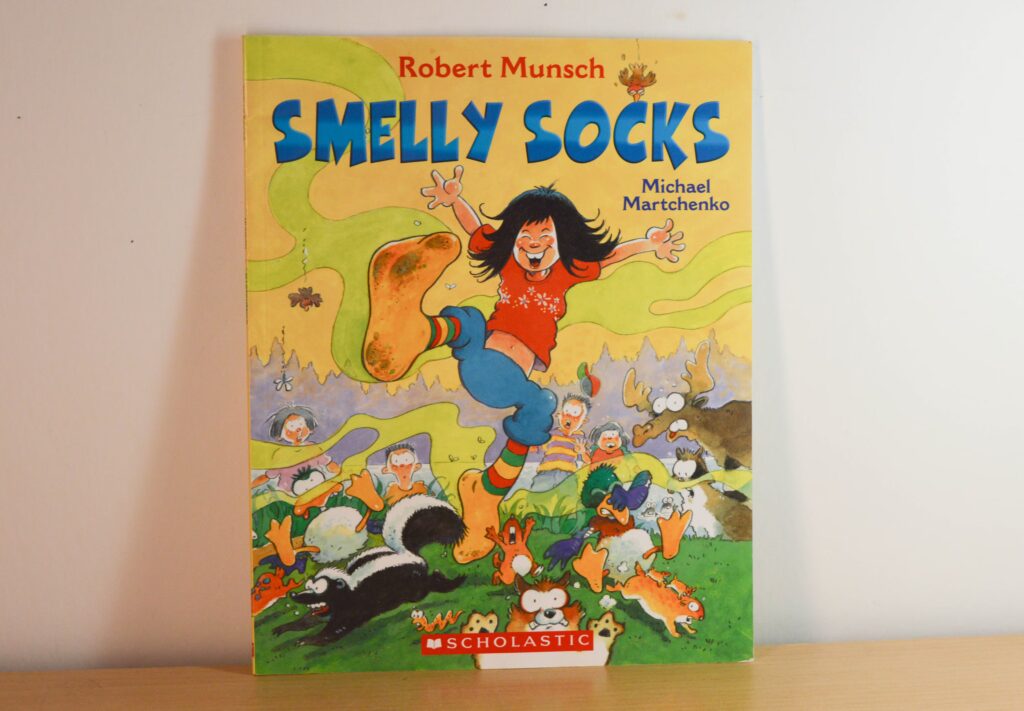
Books that changed everything for me as a child were Robert Munsch books. One book I distinctly remember is Smelly Socks. I enjoyed reading these stories and having my parents read them to me because they were silly and always made me laugh. As a child, I gravitated toward books that were humorous and playful. Even as an adult, that preference has stayed with me. I do not watch many movies, but when I do, I usually choose comedies. From childhood into adulthood, I have always enjoyed things that make me laugh and smile. When I was studying my undergraduate degree at the University of Lethbridge I took a four month course called Education 2500-Orientation into Teaching. It is a course that gives students the opportunity to experience what it is like to pursue a career in education. I was placed in a Grade 4 and 5 split classroom and would do read-alouds. My first book I read to the students was Smelly Socks. The students enjoyed the book, they were engaged and were excited that I read Robert Munsch, so for the rest of my practicum I read them his books. Every time I read a book to these students they were very excited because “the combination of the visual and literary arts wins hearts,” Robin Bright says in Sometimes Reading is Hard on (page 150). Children particularly enjoy picture books because they are imaginative, diverse and offer a variety of different perspectives (Bright, 2021). Looking back, Smelly Socks has remained as a book that has brought meaning into my life. From childhood to adulthood, I have experienced the joys of storytelling and how a great book can change everything for readers by making them laugh and smile.
Here are the prompts:
- Describe your ‘one book’ that changed everything for you as a reader.
Smelly Socks, written by Robert Munsch, is about a girl named Tina who loves her colourful socks so much that she commits to wearing them every day. Over time, her socks become very smelly because she refuses to take them off, even to wash them. Tina’s friends eventually have had enough of the smell and carry her to the river to wash the socks. The socks are so smelly and dirty that the beavers run out of the river and go to live with Tina’s grandpa. Munsch was inspired to write this story while telling stories in the Northwest Territories, where one of the children was named Tina and wore very colourful socks. This experience led to the publication of Smelly Socks in 2003 (Munsch & Martchenko, 2010).
2. How do you feel about reading? Tell me about it.
Growing up, I enjoyed it when my teachers or parents read books aloud, but I did not enjoy doing the reading myself. I struggled with reading, writing and spelling as a child. As I have gotten older, I have come to enjoy reading more and more! What I choose to read has also changed as I have grown older.
3. What types of books do you like to read?
When I was in high school, I read popular sci-fi, fantasy and dystopian novels such as The Hunger Games, The Maze Runner and Divergent series. I also enjoyed the Shadowhunter series, including City of Bones and Clockwork Angel. More recently, I have shifted toward educational reading, particularly books on psychology and history. I have been exploring a collection of short books about World War II, including topics such as the D-Day Landings, the SS and the Nuremberg Trials.
4. List some hobbies and things you like to do outside of school.
Hobbies that I like to do outside of school are outdoor related such as skiing, fishing, golfing and going for walks with my dog outside in nature.
5. Who are your favourite authors?
Honestly, I do not have any favorite authors. I tend to read whatever catches my interest or whatever I hear is popular or highly recommended.
6. Tell me a bit about the last book you read that you really enjoyed.
An educational book I have recently read is Kids These Days by Dr. Jody Carrington. In this book, Carrington draws on her background in psychology to discuss important topics related to the field of education. The main message I took from this book is the importance of building deep and meaningful connections with students. When teachers form strong connections with their students, it ignites motivation, builds trust and creates a sense of safety and belonging. She also shares strategies for building relationships with students and creating positive, trusting connections in the classroom which I found helpful.
7. Tell me a bit about what you have been doing since last semester during your winter break. How have you been spending your time?
I went into the winter break thinking I would do lots of activities and stay busy, but instead I spent the break resting and enjoying time at home with my family. I ate good food, relaxed and was surrounded by great company, which was exactly what I needed.
8. What subjects or topics do you like learning about?
I love learning about history, psychology/neuroscience and religion! I am not religious, but I enjoy learning about the different religions. I took a few world religion courses when I was studying my undergraduate degree, they were interesting!
9. If you could read a book about one thing, what would that be?
If I could read a book about one thing it would either be fantasy, dystopian or historical literature.
Resources:
https://www.scholastic.ca/our-books/book/smelly-socks-9780439967075
https://www.scholastic.ca/our-books/book/mad-about-munsch-9781443189057
Bright, R. M. (2021). Sometimes Reading is Hard: Using Decoding, Vocabulary, and Comprehension Strategies to Inspire Fluent, Passionate, Lifelong Readers. Pembroke Publishers.