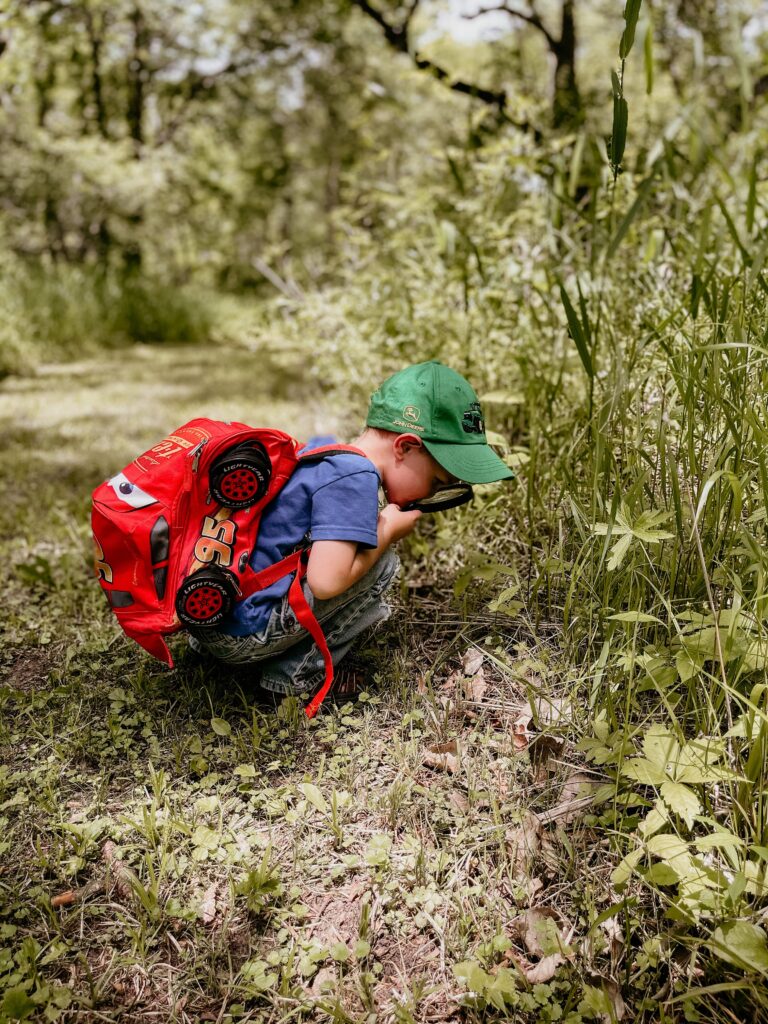
Over the last five weeks, I explored how outdoor mathematics education can be implemented across different grade levels while connecting to the BC Curriculum. For Kindergarten to Grade 3, I researched outdoor math activities and online resources that support hands-on, place-based learning. For Grades 4 to 7, I examined broader themes in outdoor education, including the use of technology and different ways students can demonstrate their understanding. For Grades 8 and 9, I investigated how outdoor mathematics supports inclusive education, the benefits and challenges associated with this approach and assessment strategies teachers can use to evaluate student learning in outdoor environments.
Throughout this inquiry, I gained a deeper understanding of how outdoor mathematics can increase engagement, provide meaningful real-world learning experiences and support diverse learners. While there are challenges related to planning and safety, the potential benefits for student learning and well-being make outdoor mathematics a valuable educational approach across all grade levels.
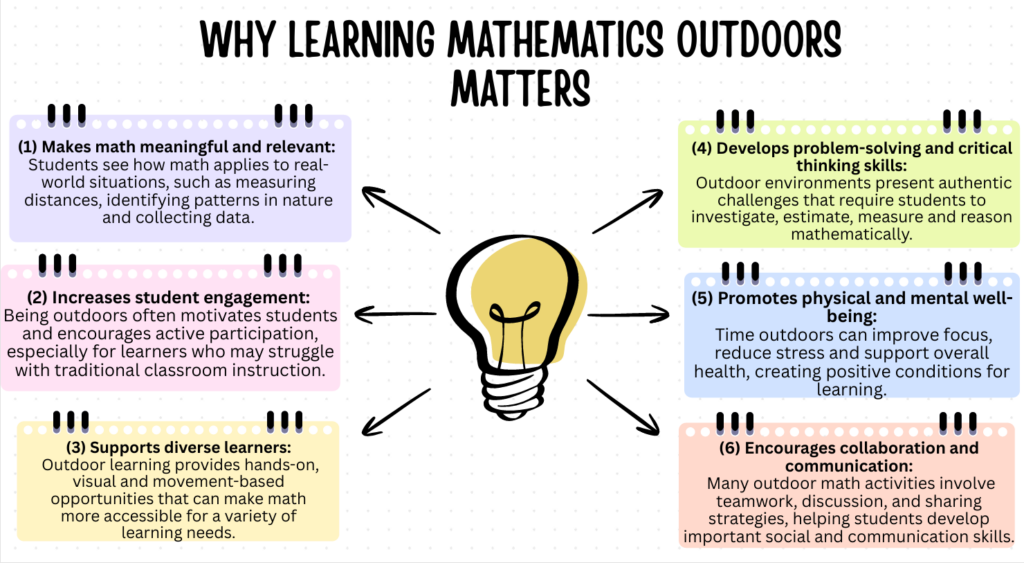
(1) Outdoor math learning makes math meaningful and relevent.
When students collect data outdoors, use natural objects for measurement, or conduct surveys while learning statistics, they are connecting math to real-life experiences. When students understand why they are learning math and how it applies to the world around them, they are more likely to stay motivated and retain the information they learn.
(2) Outdoor math learning increases student engagement:
Outdoor math learning increases student engagement by providing students with opportunities to move, explore and interact with their environment. Learning in an outdoor setting can make math more enjoyable and meaningful, which helps students stay focused and actively participate in their learning.
(3) Outdoor learning supports diverse learners.
Outdoor learning supports diverse learners by giving students the opportunity to approach math in different ways rather than relying solely on paper-and-pencil tasks. Outdoor learning supports diverse learners because it provides multiple ways for students to engage with math and demonstrate their understanding.
(4) Outdoor learning develops problem-solving and critical thinking skills.
(5) Outdoor learning promotes physical and mental well-being.
It encourages movement and provides students with regular opportunities to spend time in nature. Being outdoors can help reduce stress, improve focus and create a positive learning environment where students feel more relaxed and ready to learn. I chose to do my inquiry project on outdoor mathematics education because students spend a large portion of their school day learning Math and English. I wanted to explore ways to incorporate more outdoor activities into mathematics and discover resources that can help students spend more time learning outside.
(6) Outdoor learning encourages collaboration and communication.
Students work together to solve open-ended tasks, collect data and share their learning and findings. Through these shared experiences, students learn to listen to others, communicate their ideas clearly and deepen their understanding through discussion and teamwork.
How I Will Implement Outdoor Learning Into My Future Practice As An Educator
For this inquiry post, I will explore how outdoor mathematics can promote inclusion, the role of technology in learning math outside and address the challenges and considerations associated with outdoor learning.
Why Outdoor Math Supports Inclusive Education
Multi-Sensory Access: For young learners in Grades K-3, outdoor math activities should include sensory materials such as sand, water and gravel. Providing tools like buckets, shovels, pots and measuring cups encourages students to explore mathematical concepts through hands-on play, problem-solving and collaboration.
Movement and Self-Regulation: Outdoor learning spaces offer flexibility for students who benefit from frequent movement and physical activity. This approach can be especially beneficial for students who experience challenges with attention and focus increasing engagement, focus and attention.
Reduced Math Anxiety: The video below explains why students experience math anxiety. It is important for educators to understand its causes and learn how to support students. Outdoor math learning can help reduce stress by removing some of the rigid barriers and silence often associated with learning math indoors. When learning is more playful and enjoyable, students are more likely to retain what they learn.
Need for Planning and Classroom Management: Effective planning and classroom management are important safety considerations in outdoor learning, as clear expectations, boundaries and supervision help ensure students remain safe.
Accessibility and Inclusion: Outdoor learning activities should be planned to ensure all students can participate, regardless of their physical abilities or learning needs. Teachers must be flexible and adapt activities to support all learners, which can sometimes be challenging when meeting diverse needs in an outdoor environment.
Aligning Outdoor Activities with Curriculum: I am about to have a reflective moment, but finding activities that directly connected to the BC curriculum standards was difficult. I had to dive deep and I will continue to do so throughout my career. Outdoor learning, real-world experiences and meaningful learning opportunities are values I hold in both my personal and professional life, but it is also important that my students learn the curriculum.
Assessment In Outdoor Mathematics
It is important that students understand the mathematical concepts and knowledge outlined in the curriculum. However, it is equally important that they develop skills such as collaboration, communication, and critical and reflective thinking. How can teachers document and assess the development of these competencies?
Journals are a great method for collecting evidence of learning. They allow students to document their thinking and learning processes over time. Teachers can use math journals as both formative and summative assessment tools.
One thing I took away from Anne Davies’ text, Making Classroom Assessment Work, is that self-assessment teaches students how to self-monitor and self-regulate as independent learners. This can be done through journals, exit tickets, verbal or written reflections. Younger students can use thumbs up or thumbs down to assess their understanding of concepts. Students can also reflect on areas they are working on and set goals to further develop their mathematical learning.
I remember sitting in my Grade 9 math class and thinking, Why am I learning this? Why is it important? When will I ever use this after high school? Outdoor learning can help answer these questions by showing students how mathematics connects to real-life situations. I want to explore how outdoor math games can be used to teach Grade 8–9 mathematical concepts in ways that are engaging, hands-on and meaningful. By connecting math games to curriculum concepts, students can develop a better understanding of what they are learning and why it is relevant to their lives, all while having fun and learning outdoors!
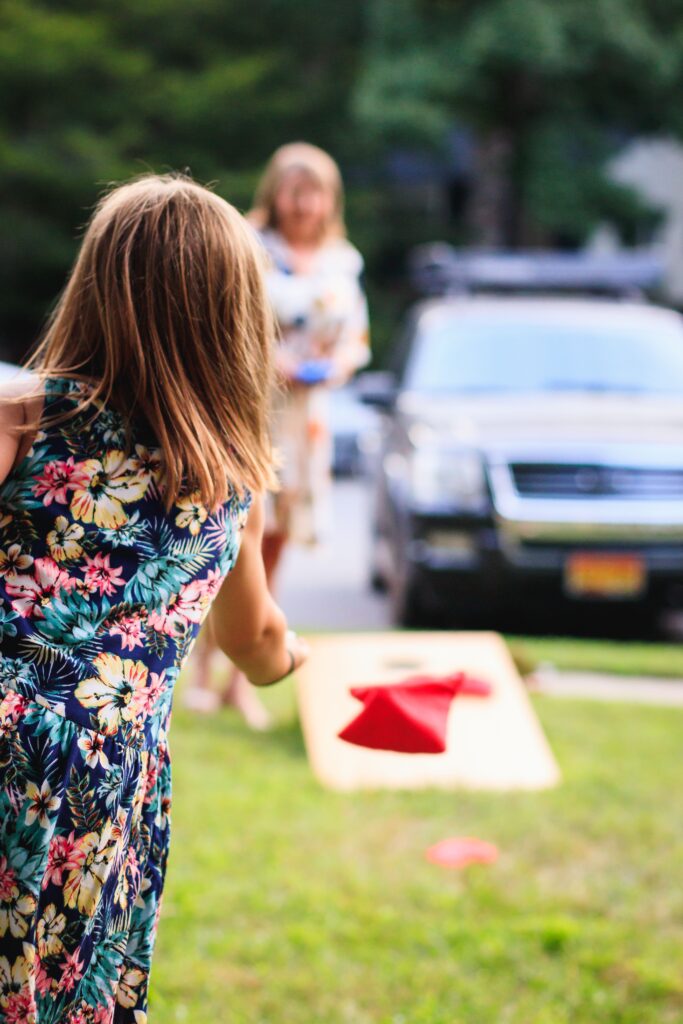
This would be calculated by Number of Outcomes / Number of Trials. Students take turns tossing beanbags toward a cornhole board and record the outcome of each throw.
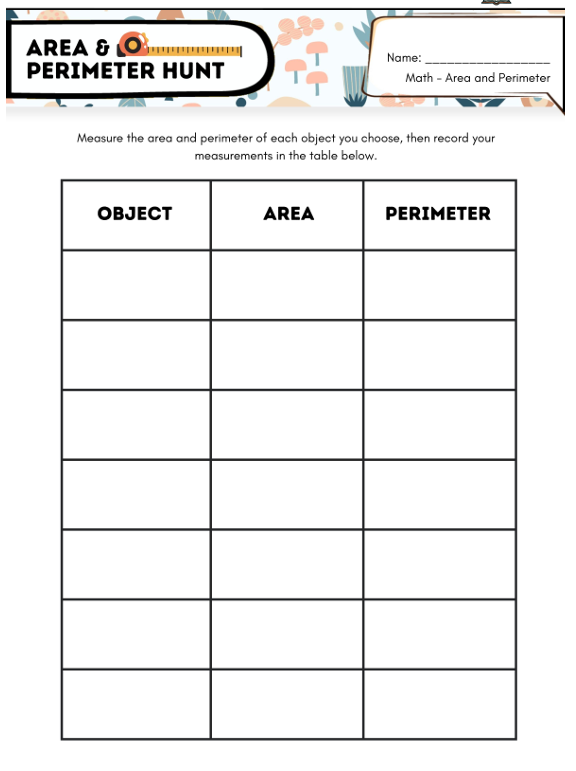
Students could create their own shapes using masking tape, chalk, or rope. Students divide into small groups and create a shape. They then calculate the area and perimeter of their shape using measuring tapes or rulers. Groups rotate around the playground and calculate the area and perimeter of another group’s shape. They can check their answers against the original group’s calculations.
To turn this into a game students can:
Create a shape with a perimeter of a certain amount of meters.
Create two different shapes with the same perimeter but different areas.
Work as a team to create a shape with a given perimeter and explain how changing its dimensions affects its area on a piece of paper.
I got this idea from: Outdoor Area and Perimeter Shape Activity on EducateOutside.com
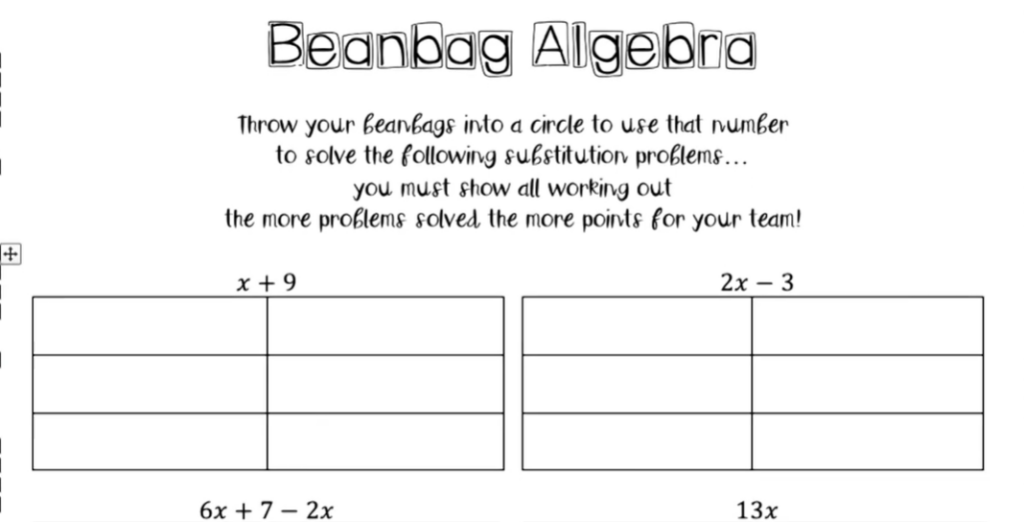
The video below features outdoor math games presented by teacher Holly Millican, who explains how to use them in the classroom. One of the games she describes is called Bean Bag Algebra, which aligns with the Grade 8 algebra learning standards in the BC Curriculum. Although, the teacher can make problems more complex to suit learning standards for different grade levels.
Bean Bag Algebra is a game where students toss bean bags to practice solving algebra questions.
These are examples of math questions she has students answer. She usually has students working in groups of 2–4, taking turns running up to the pre-drawn chalk circles and throwing a bean bag at a circle. This activity focuses on content knowledge, collaboration and teamwork skills!
These are just a few examples of math games that can be done outdoors! It is important to keep in mind that outdoor math games and learning is essential because:
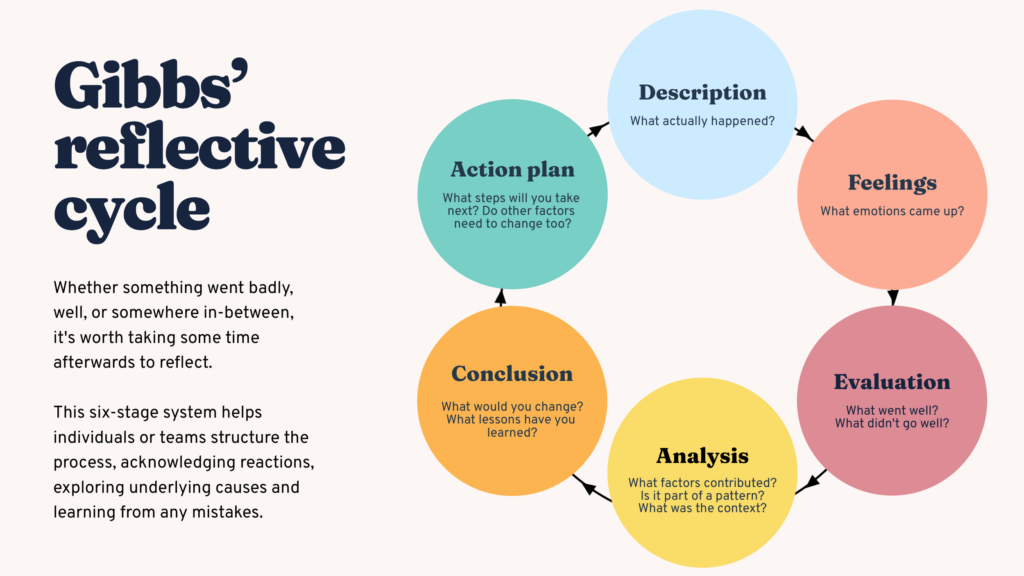
This week we went to a local middle school and created stop-motion videos with Grade 5 students! This week I will be documenting my experience using the Gibbs Reflective Cycle:
I will be using this model because it helps me think critically about my in-situ experience, reflect on my learning and identify areas for future growth and improvement.
Description
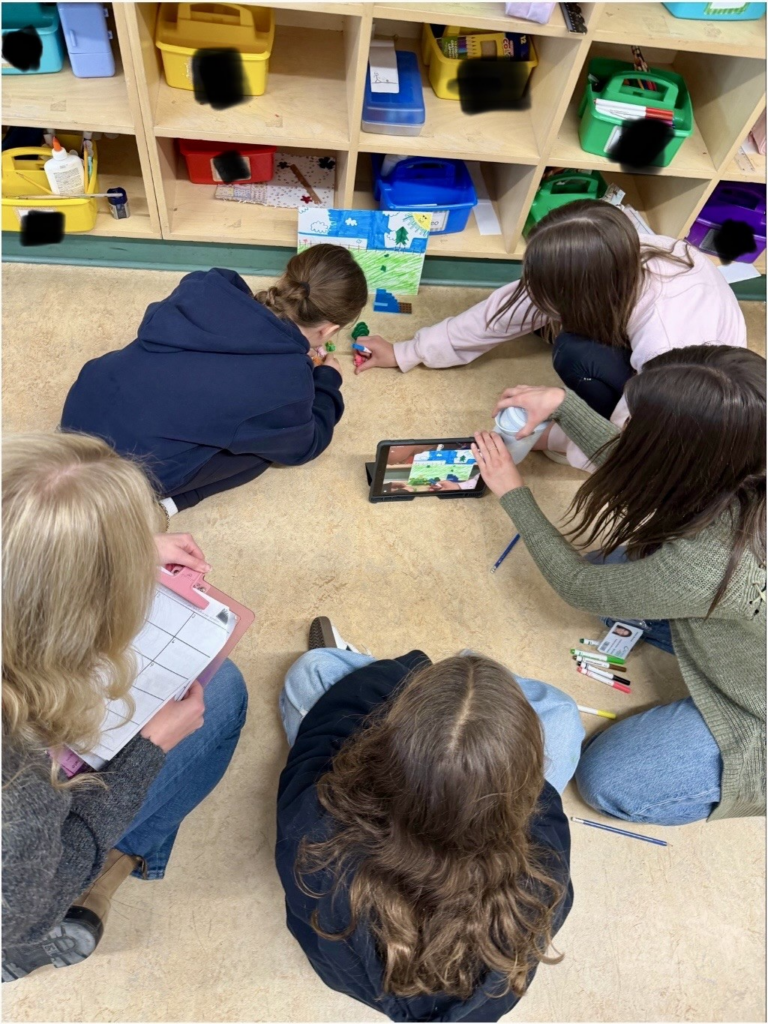
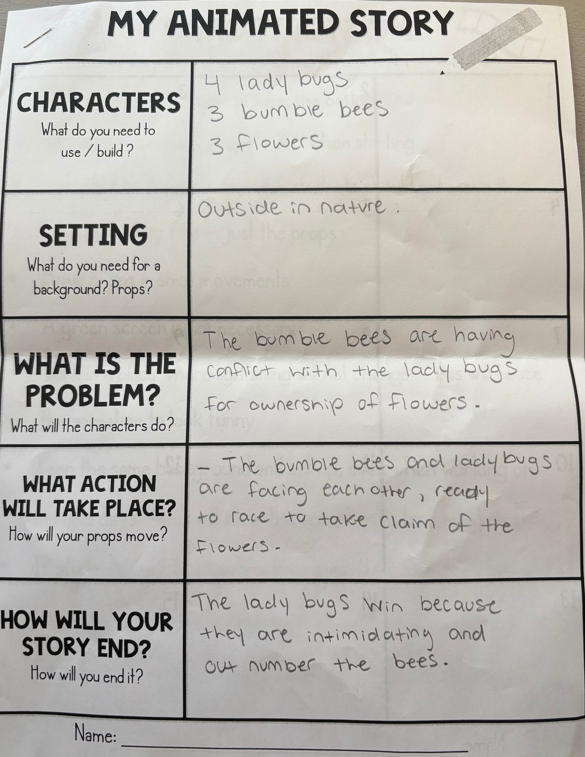
This week, we created stop-motion videos with Grade 5 students using Zing Studio stop-motion app! I was paired with another teacher candidate and together we worked with three students to create a stop-motion video. First, we introduced ourselves and began planning the story we wanted to create using the My Animated Story outline that I shared in Weekly Journal #2. This outline helped us identify the characters, setting, problem, actions that took place and the ending of the story.
Then, we assigned roles to each student. One student was responsible for recording and creating the stop-motion video, another selected the objects for each scene and the third contributed ideas and helped develop the story as it progressed. Once we had our story plan and student roles established, we were ready to begin creating our stop-motion story!
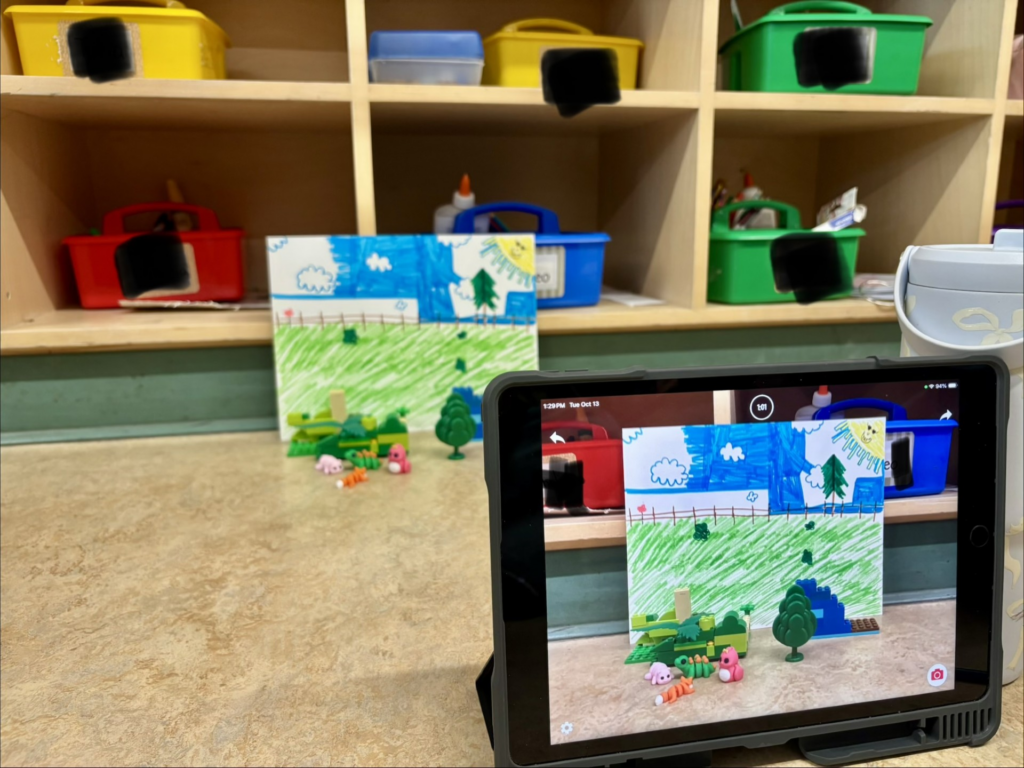
Below is an image that I took of the setting of our story:
Feelings
I was excited to finally be back in the classroom and working with students again! I enjoyed seeing how well the students collaborated as a team, how creative they were and how eager they were to share their ideas throughout the activity. I am always excited and happy to work with students and be in the classroom environment. This is where everything we learn in class comes together. The theories and concepts we discuss begin to connect through real experiences, like pieces of a puzzle falling into place.
Evaluation
What went well?
The students demonstrated excellent teamwork and were very respectful of one another. When I was assigning roles, if two students wanted the same role, they would say, “You can have it,” and then the other would respond, “No, you can have it.” They wanted to make sure everyone was happy with their role and felt included. It was great to see such kindness and consideration for one another. The students were also really engaged and had many creative ideas.
The teacher candidate and I worked well together and bounced ideas off one another throughout the activity. I took the lead in having the students introduce themselves and explaining the activity and we both helped assign roles. The teacher candidate I was paired with was especially skilled with technology and did a great job helping the students learn how to use the stop-motion app to create their videos.
What did not go well?
Nothing went wrong during the activity. The only challenge was that the students were incredibly creative and continuously came up with new ideas and additions for their stop-motion video. Unfortunately, we did not have enough class time to include all of their ideas.
Analysis
This experience highlighted the importance of providing students with opportunities to collaborate, be creative and use technology in meaningful ways to support their learning. The students worked collaboratively and ensured that everyone felt included. They demonstrated strong teamwork, decision-making and planning skills while developing their story.
Every time I participate in an in-situ experience, whether it involves reading a book, teaching a lesson, or facilitating a new activity, I wonder whether students will find it engaging. Although I believe activities such as stop-motion videos and Readers Theatre are valuable learning experiences, I never know how students will respond until they participate. This experience reminded me that students are often highly creative, motivated and engaged when given opportunities to express themselves. It also reinforced that not every activity will appeal to every student and that is okay because all students have different interests and learning preferences!
Below is a photo of our group in the process of creating our stop-motion video:
Conclusion
If I were to do this project again, I would ensure that all of the supplies were organized and readily available, such as markers, paper for backdrops and a variety of objects, toys and figures for students to use. I would also provide additional equipment, such as a tripod, so students could be as creative as they wanted. Both my professor and the Grade 5 teacher had a wide range of materials available and seeing how these resources supported student creativity made me realize that I would like to provide a similar environment in my own classroom.
I would also have made this a bigger project if there had been more time, possibly connecting it to the English Language Arts curriculum. For example, if it were my class, I could read a story to the whole class and have students create their favourite part of the story using stop-motion videos. Students could present their videos to the class, explaining the scene they created and why it was their favourite part of the story.
Action Plan
If I were to recreate this project with my own class, I would first have students watch a tutorial and practice using the technology with their groups so they could use it more independently and with less teacher support. Then, on the final day, I would give them an hour and a half to two hours to record and create their stop-motion video. This would give students the opportunity to take greater ownership of their learning and develop their technology skills.
I would also have students follow the same process of first writing out their storyline and then assigning roles within their groups. This helped our group stay organized and on track throughout the activity. The Grade 5 teacher explained that she intentionally created the groups based on students’ personalities and interests so that the project would run smoothly and students would work well together. This is something I would do as well in my own classroom.
All in all, this was a fun activity and I would definitely do it with my own class one day! I also learned a creative way to use technology to make learning more engaging and enjoyable for students.
Our Story
The story features Derek the Fox, Georgie the Dinosaur, Sabrina the Bird and Petunia the Pig. The story starts with everyone playing hide-and-seek, with Sabrina as the seeker. However, the story quickly takes a turn when everyone cannot find Petunia. It turns out that she decided to go on a nature walk and her friends eventually find her!
Below is the link for our final stop-motion video we created with the Grade 5 students uploaded to Seesaw:
Last week, I attended a Truth and Reconciliation workshop. While the presentation indoors was educational and engaging, I found myself restless and struggling to focus. When the workshop moved outside to the outdoor classroom, everything changed. Listening to an Elder, playing Ktunaxa games and being active outdoors helped me feel calm, present and fully engaged. The warmth of the fire, the fresh air and the beautiful sunshine created an environment where I could focus and learn more effectively. Experiences like this remind me how meaningful outdoor learning is and how strongly it can support both learning and mental well-being.
This experience clarified how much being outdoors supports my focus, engagement and well-being. It also inspired me to explore engaging and meaningful outdoor mathematics activities and resources for students in Grades 4-7.
Activity For Grades 5-6
I was trying to find resources specifically for teaching Grades 4-7 mathematics outdoors and came across a website called Educate Outside, which offers free resources and activity ideas for teaching math and science outdoors across a variety of grade levels.
This website offers freeresources and worksheets for students to complete and engage with during outdoor learning activities!
This activity can extend to Grades 4–7 under the BC Curriculum. Students can step outside the classroom and walk to a local park to observe cars, people, or animals and record their observations. Younger grades could simply collect data and create a chart as a class to represent what they observed. Older grades can collect data and answer questions such as “What is the most common colour car?” Students can collect data and represent their findings in different ways.
For Grade 4 mathematics students could observe cars, record vehicle colours and tally them. Students could create bar or pictographs and compare results. The BC Grade 4 learning standards include representing data using one-to-one and many-to-one correspondence in bar graphs and pictographs.
Students Explain Their Learning
As students get older, they become better at presenting what they have learned and explaining their thought processes to the class. After completing a math activity outdoors, students can participate in a reflection circle. During the reflection, a talking stick or pinecone can be passed around the circle and whoever is holding it can share what they observed, something new they learned, or any questions they still have.
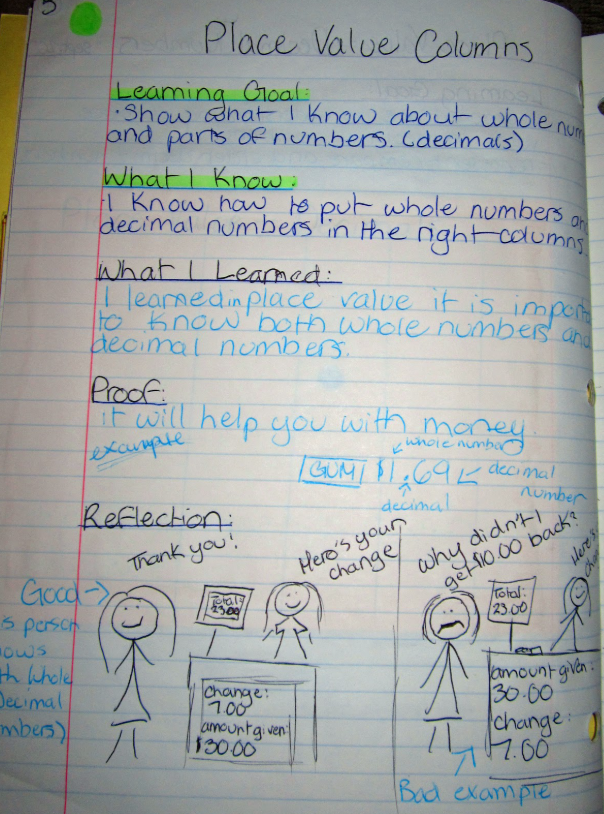
This is a great example of a journal entry in which a student documents their learning goal, what they already know, what they learned during the activity or lesson, evidence of their learning and a reflection on their experience.
This example shows that outdoor mathematics learning, journal entries allow students to record observations, explain their mathematical thinking and reflect on how they applied math concepts in real-world contexts. This helps deepen understanding and encourages students to take ownership of their learning. This is something I might use as a form of assessment during my practicum that can be done outdoors!
Technology and Outdoor Learning
Students in middle school are more familiar with and able to use a wider range of technologies. These technologies can help connect students to mathematics learning in meaningful ways. For example, Grade 7 students can use the iNaturalist app to collect data about biodiversity in their local community. They can record the number and types of plants, insects and animals they observe in their local environment, then organize their findings using graphs or tables. Students can analyze their data to make inferences about which areas of their community support greater biodiversity. They can also explain why they chose a particular method of data representation and how it effectively communicates their results.
This idea could be expanded into a large cross-curricular project where students collect and analyze data to determine which areas of their local environment support the greatest biodiversity and explain why. This would be a great resource for finding local Ktunaxa plants in the community. This is one example of how using apps can be incorporated in learning mathematics!
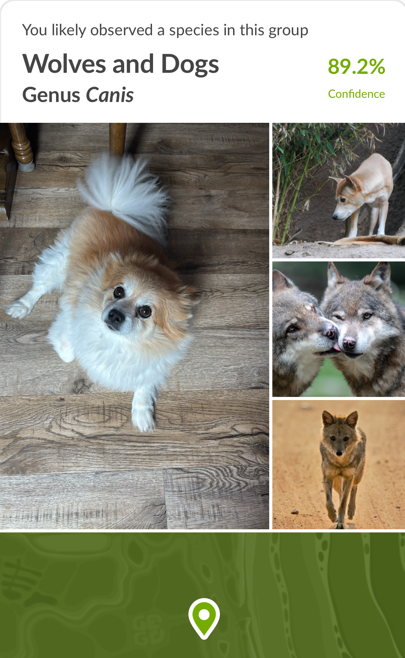
I tested the accuracy of the app on my dog Bentley:
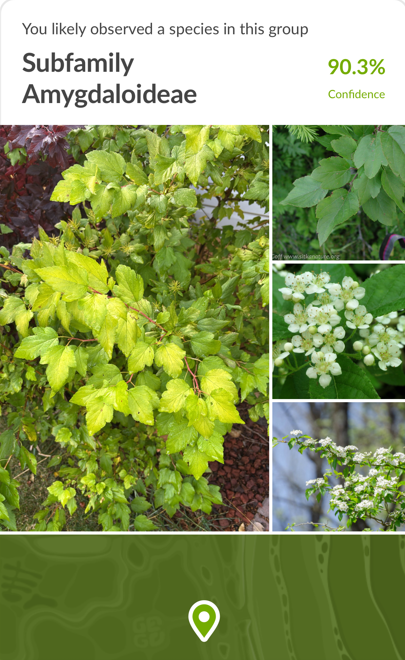
The photo taken is of a bush in my backyard:
I believe this app is accurate because the bush produces small white flowers during the summer. Since it is currently fall, there are no white flowers present, which matches what the app shows.
That concludes this week’s research. Next week, I plan to explore outdoor learning opportunities and mathematics resources for Grades 8-9!
Before our in-situ experience, where we will have the opportunity to create stop-motion videos with Grade 5 students as a class, we first practiced using this technology in small groups. We used the Stop Motion Studio app to become more comfortable and confident with this type of technology before teaching it to students.
Why Are Stop-Motion Videos an Effective Classroom Tool?
I think stop-motion is a great way to incorporate technology into the classroom because it teaches students how to use technology and use it to support their learning. I also think it is a great way for students to think creatively about how to make their stop-motion videos, what materials to use and what type of story they would like to tell. We did ours in groups of three or four, so creating these videos is also a great way to encourage students to collaborate.
I think stop-motion can be used to present learning across a variety of subjects in the BC curriculum. This activity also strongly connects to two of the Core Competencies:
How Will You Use This Learning In Your Future Teaching?
Our teacher gave us a planning sheet to use as a guide when we complete this activity with the Grade 5 students. As I looked through the sheet, I immediately thought, “This would be a great activity to connect to English Language Arts!”
Below is my worksheet I created based on the stop-motion video I made with my group:
If students are completing a novel study, they could create a stop-motion video that depicts an important part of the story. They could share their video with the class and explain why they chose that scene and why it is significant to the story. I remember when my group and I finished our stop-motion video, we wanted to do a share-out so we could watch everyone’s videos and see what they had created. This would be a great summative assessment that shows students creativity and what they learned from the novel.
I enjoyed doing this activity and getting to collaborate with my classmates. We were excited to choose from the materials that our professor provided and create a short story or event. My group and I were laughing and constantly generating new ideas to make our video more creative and engaging. We decided to add audio, including some of our own sound effects and voices, to make the video more silly and enjoyable. I had a great experience doing this activity and I cannot wait to share what I have learned and create stop-motion videos with the Grade 5 students next week!
Below is the stop-motion video my group and I created together!
Real-World Application: The outdoors is filled with opportunities for young learners to make connections to math and science. Through these experiences, children can connect school subjects to the real world and engage in real-life problem-solving.
Curiosity: Being outdoors in the fresh air reduces stress, makes students more active and motivated, encouraging them to be more open to learning new things.
MATHEMATICS
Patterns
Nature Scavenger Hunt: Children can practice counting and exploring by searching for selected items in nature, such as flowers, leaves, pebbles, or sticks and keeping track of how many they discover.
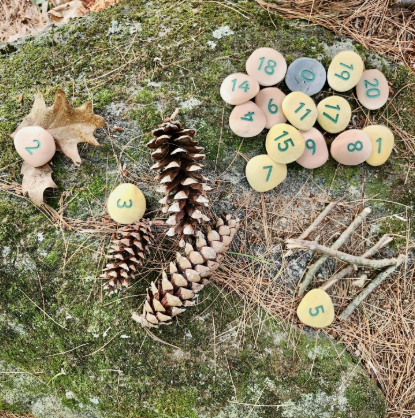
Creating Patterns with Natural Items: Invite students to use materials found in nature, such as pinecones, sticks, leaves and flowers, to build repeating sequences. Encourage them to identify, extend, or design their own patterns.
These activities align with BC Curriculum’s Content Areas:
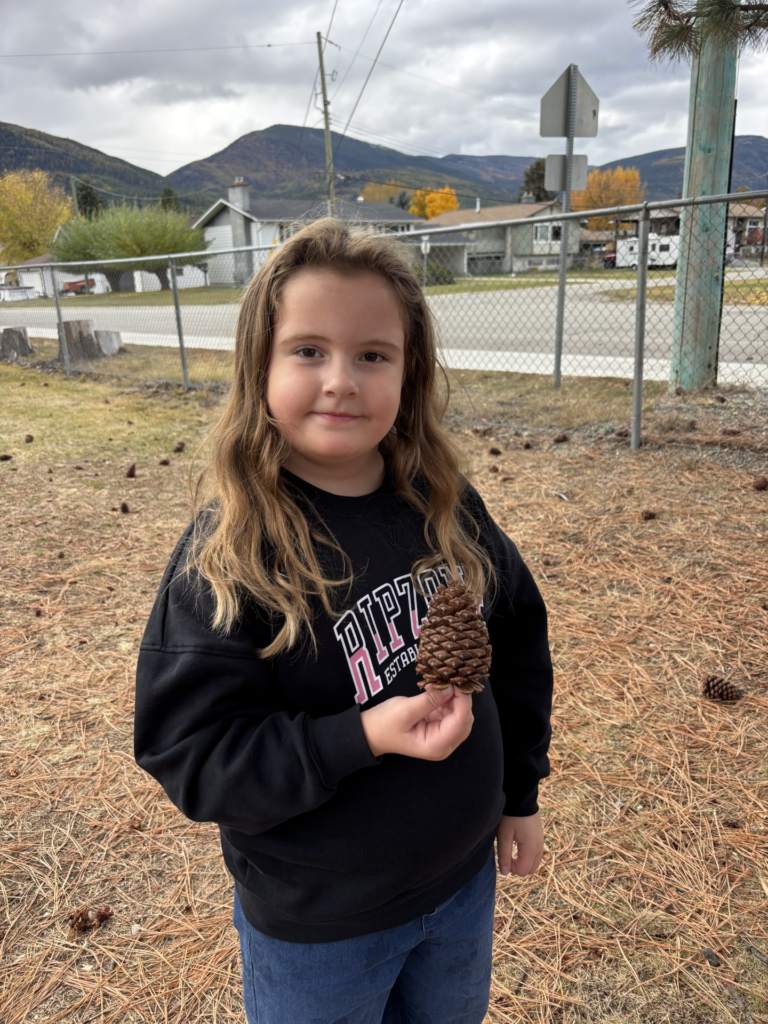
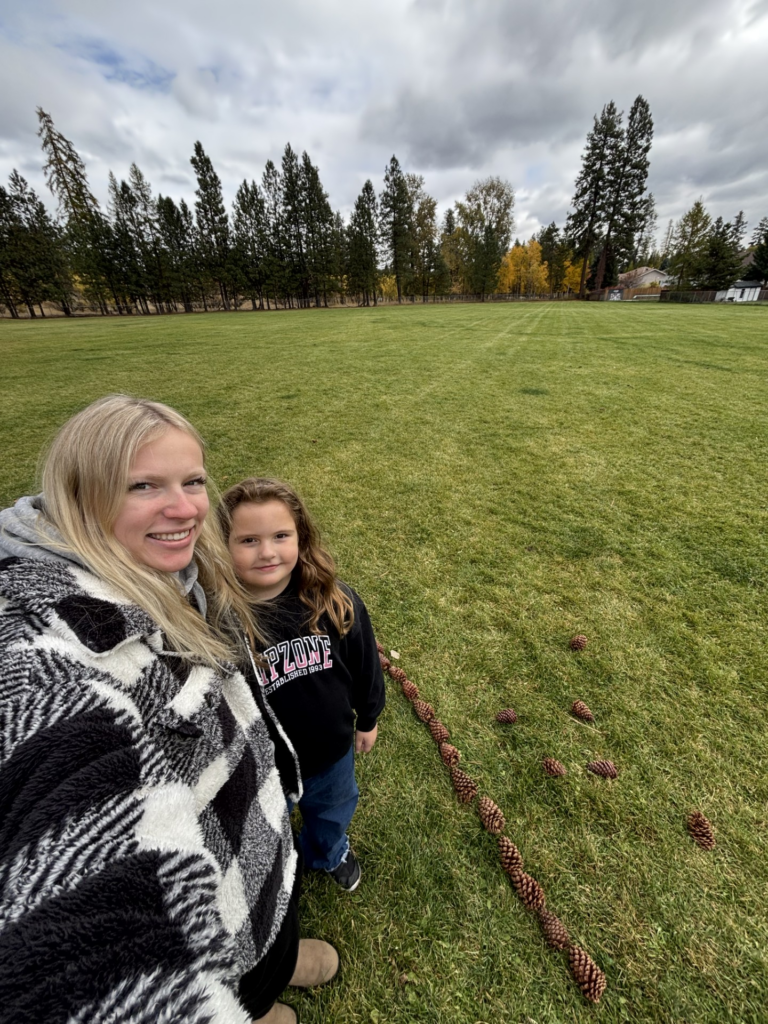
My niece Avery and I walked to a local playground and found pinecones to measure ourselves with.
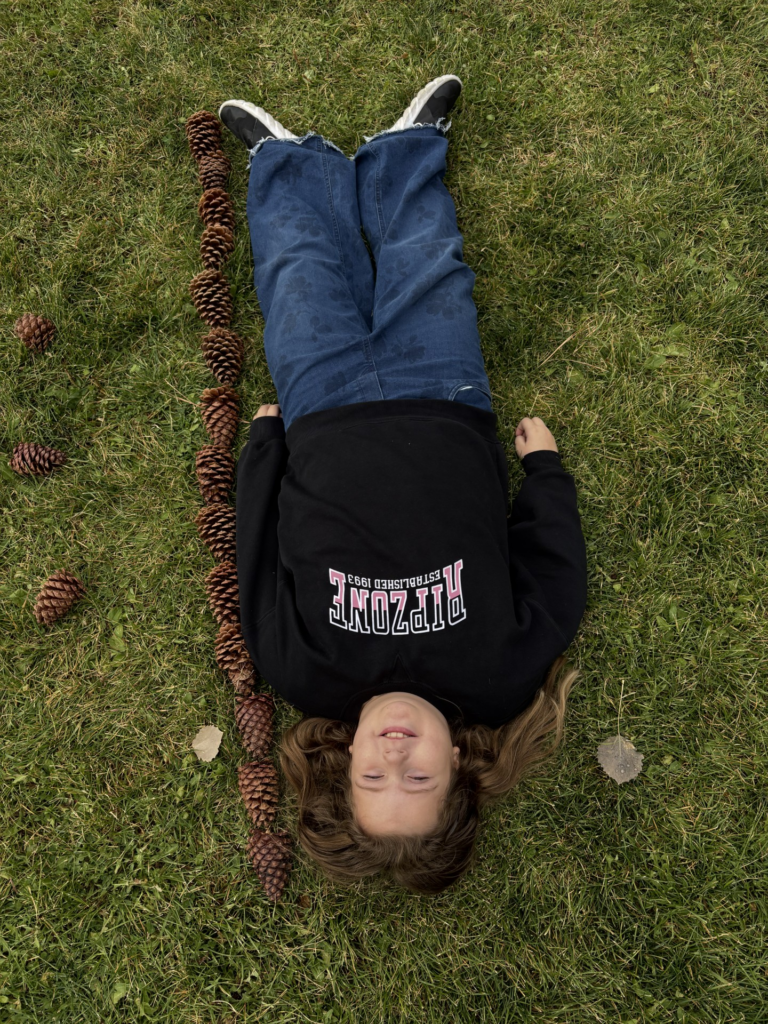
The activity we did aligns with the Grade 1 mathematics curriculum on measurement. We used pinecones as non-standard units of measurement to measure our heights.
Avery was 14 pinecones tall and I was 16 pinecones tall! A conclusion a teacher would want to hear from a Grade 1 student is, “Miss Andersen needed two more pinecones because she is taller than Avery.”
This activity was successful and it was really fun to do with my niece. She loves the outdoors and helping us around the house, so she was more than willing to help me! It is important to note that everything we took from the land, we put back where we found it.
Indigenous Math Resources
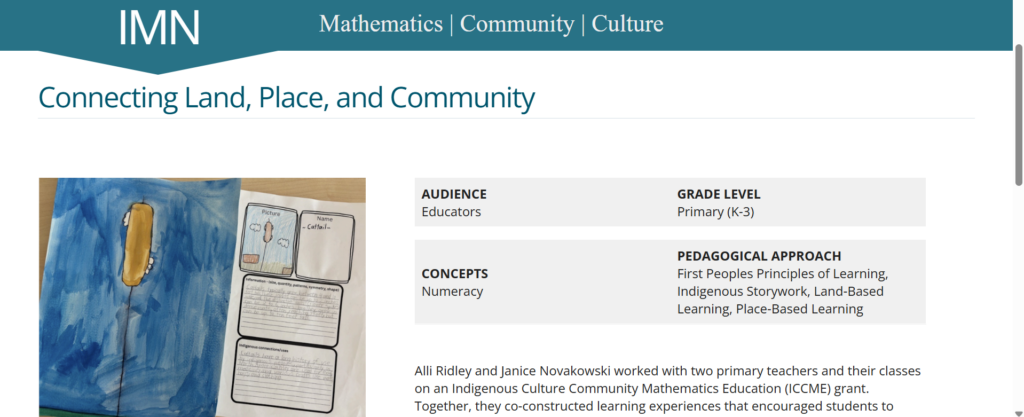
University of British Columbia (UBC) has created the Indigenous Math Network,which offers a wide variety of unit plans, lesson plans and Indigenous math resources for primary through high school. Many of the resources feature outdoor, land-based learning activities that help students explore mathematical concepts through connections to their local environment and community. How cool is that!
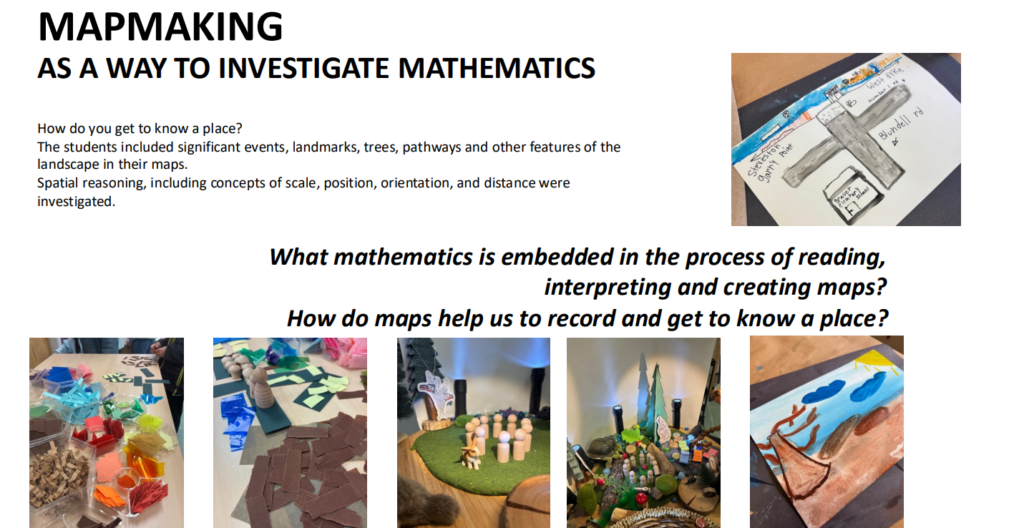
I choose to look into project Connecting Land, Place and Community for Grades 1-2. The project was cross-curricular, which I LOVE. It connects to English Language Arts through student journaling and to Art Education by having students create maps of local landmarks. It also connects to Mathematics as students identify shapes in their local environment, calculate the distance to local landmarks, measure distances and objects found in nature and apply mapping and measurement skills in meaningful, real-world contexts.
I love the idea of having students create an art project of a local landmark or a map of their community. This activity connects to mathematics because students can find shapes in their environment, measure and compare distances and use their spatial reasoning skills to create a map that shows where important places are located.
This activity connects to Grade 1 Mathematics Content Areas:
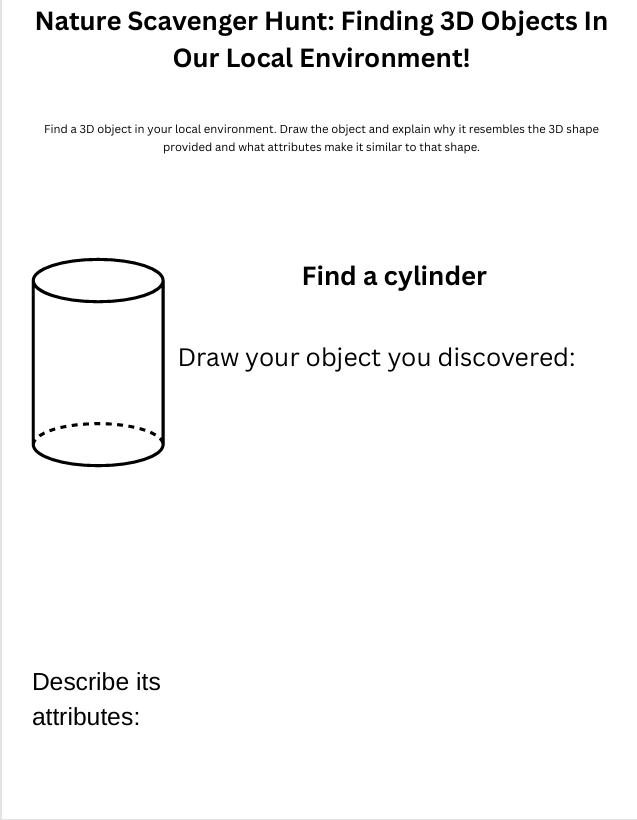
As an introductory activity for K-3 geometry, students can go on a shape hunt outdoors. Students find objects in nature that are 2D shapes or 3D objects. For Grade 3, students could identify rectangular buildings or cylindrical tree trunks, document them, and explain the attributes that make them rectangles or cylinders.
This week, we watched a film called Most Likely to Succeed (2015). The film challenges the notion of whether traditional schools are adequately preparing students for the real world. It follows students at High Tech High in the United States, a school that focuses on project-based and student-centered approaches to learning rather than traditional teaching methods such as writing papers, taking tests and learning through a lecture-based approach.
What Was Your Reaction to the Film?
This film made me think about my role as a future educator and as a former high school student. I agreed with the film’s emphasis on helping students discover their interests and using those interests to motivate learning. I also believe students should develop skills such as collaboration, critical thinking and creativity. However, I think it is equally important that students learn the curriculum and core subjects such as English, Math, Science, Social Studies and Art. Creativity can be fostered by giving students choice in how they demonstrate their learning and when appropriate, allowing them some autonomy in what they learn.
As a former high school student, I related to the girl who said, “I would rather learn how to ace the test.” I understood her perspective because she was referring to learning how to study and acquire the knowledge needed to get into college, where she would have more autonomy in choosing what she wants to learn and pursue as a career.
So What? Why Does This Matter?
What I find important is helping students succeed within the current education system while also preparing them for life beyond school such as fostering creativity, critical thinking and social skills. I am concerned with finding a middle ground between having a student-centered classroom and a teacher led classroom.
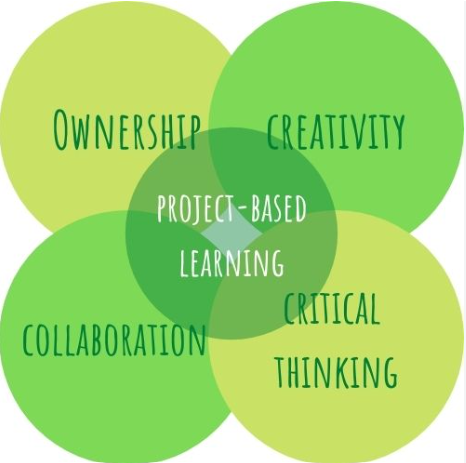
Project-Based Learning: Students develop knowledge and skills while working to solve a problem, answer a complex question, or investigate a real-world issue that is outline in the curriculum. Rather than demonstrating their learning through tests, students can showcase their understanding in a variety of ways, such as presentations, dioramas, videos, podcasts, posters, debates, research projects, performances, or digital portfolios. These alternative assessments allow students to apply their learning creatively while developing important skills such as communication, collaboration, critical thinking and problem-solving while learning the curriculum.
Social Studies Curriculum: I learned very quickly that the Social Studies curriculum is very broad and I only recently learned why. The BC Social Studies curriculum allows for flexible teaching and learning because it has “fewer and broader required topics allows more time for teachers to engage in hands-on learning and inquiry activities rather than having to focus on covering a long list of required content.” Instead of simply memorizing dates and historical facts, students focus on exploring topics that interest them, while answering open-ended questions, engaging in debates and discussions about historical and contemporary issues. Students will learn how to critically think and come up with their own solutions to problems. This approach encourages deeper thinking and helps students make meaningful connections to their learning.
The Everyday Use and Math and English: In our daily lives, we face numerical and literacy-related challenges. Math is important because it allows us to take complex problems and break them down into simpler steps. For example, when creating a budget, you can sort your income, expenses and extra spending money. English is important for understanding, learning and communicating. Therefore, it is important for educators to teach the Math and English curriculum. It is important for educators to make this learning more engaging by using manipulatives in math and helping students apply what they learn to real-world situations when teaching core subjects.
Welcome to my free inquiry project! I am currently a fourth-year student in the UVIC East Kootenay Education Program. Last year, during my six-week Kindergarten practicum, I did not incorporate as much outdoor learning as I would have liked. Being outdoors is something that I enjoy and value in my daily life. As a result, I am creating an inquiry project focused on outdoor learning opportunities in mathematics education for students in Grades K-9. I will conduct research and develop a collection of outdoor learning activities across a variety of subjects aligned with the BC Curriculum learning standards.
Why is Outdoor Education Important?
Young children are moving indoors at an important time of growth and development when they would benefit from being outdoors. Research suggests that outdoor learning is important for student wellbeing, development and overall quality of life. The wellbeing of young individuals is shaped by their social connections and the environments in which they learn and grow, both of which are critical to their overall health, happiness and development. When students learn outdoors, they have opportunities to explore, discover and solve problems together, helping them develop important social skills and work collaboratively toward a common goal. Furthermore, outdoor environments support children’s well-being by:
For this inquiry project, I will explore outdoor education through the lens of mathematics instruction for students in Grades K-9. I will review research on the benefits of outdoor learning and investigate creative, hands-on math activities that can be taught outside while supporting BC Curriculum outcomes. I chose to focus on mathematics because it is a core subject that is taught daily and often takes up a significant portion of the school day. By moving some math instruction outdoors, educators can create engaging, meaningful learning experiences while helping students connect mathematical concepts to the world around them. This inquiry project will serve as a practical resource that I can use in my future teaching career and that other educators can use to incorporate outdoor learning into mathematics instruction.
My first inquiry post will focus on math outdoor education opportunities for Grades K-3. Inquiry post #3 will focus on Grades 4-7 and inquiry post #5, will focus on Grades 8-9. I will also try some of these activities and reflect on my own current and past experiences!