Free Inquiry Post #2
Key Benefits of Outdoor STEM Learning
Real-World Application: The outdoors is filled with opportunities for young learners to make connections to math and science. Through these experiences, children can connect school subjects to the real world and engage in real-life problem-solving.
Engaging in Hands-On Learning: “Hands-on learning helps students understand physical interactions and natural phenomena.” When children learn through hands-on activities, their brains connect words and their learning with their actions and sensory experiences.
Curiosity: Being outdoors in the fresh air reduces stress, makes students more active and motivated, encouraging them to be more open to learning new things.
MATHEMATICS
Patterns
Nature Scavenger Hunt: Children can practice counting and exploring by searching for selected items in nature, such as flowers, leaves, pebbles, or sticks and keeping track of how many they discover.
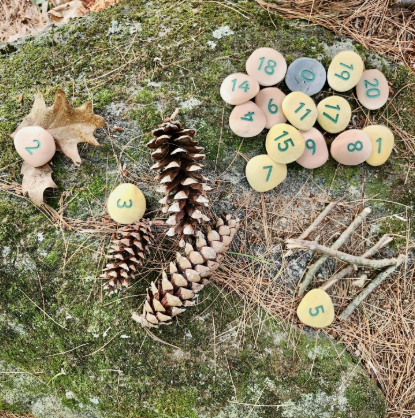
Image from: Scholars Choice
Creating Patterns with Natural Items: Invite students to use materials found in nature, such as pinecones, sticks, leaves and flowers, to build repeating sequences. Encourage them to identify, extend, or design their own patterns.
These activities align with BC Curriculum’s Content Areas:
Number concepts up to 10.
Repeating patterns with two or three elements.
Patterns can be extended to Grades 1-3 as well! They are covered in the content areas in the BC Curriculum.
Measurement
| Kindergarten: Compare objects in nature by size, height, or weight for example as students which weighs more: sticks or pinecones? |
| Grade 1: Measure and compare natural objects using non-standard units for example, using paper clips or blocks as measurment. |
| Grade 2: Measure natural objects using standard units such as centimetres and metres. |
| Grade 3: Measure and explore length, perimeter, mass, capacity and time using nature-based investigations. |
My niece Avery and I walked to a local playground and found pinecones to measure ourselves with.
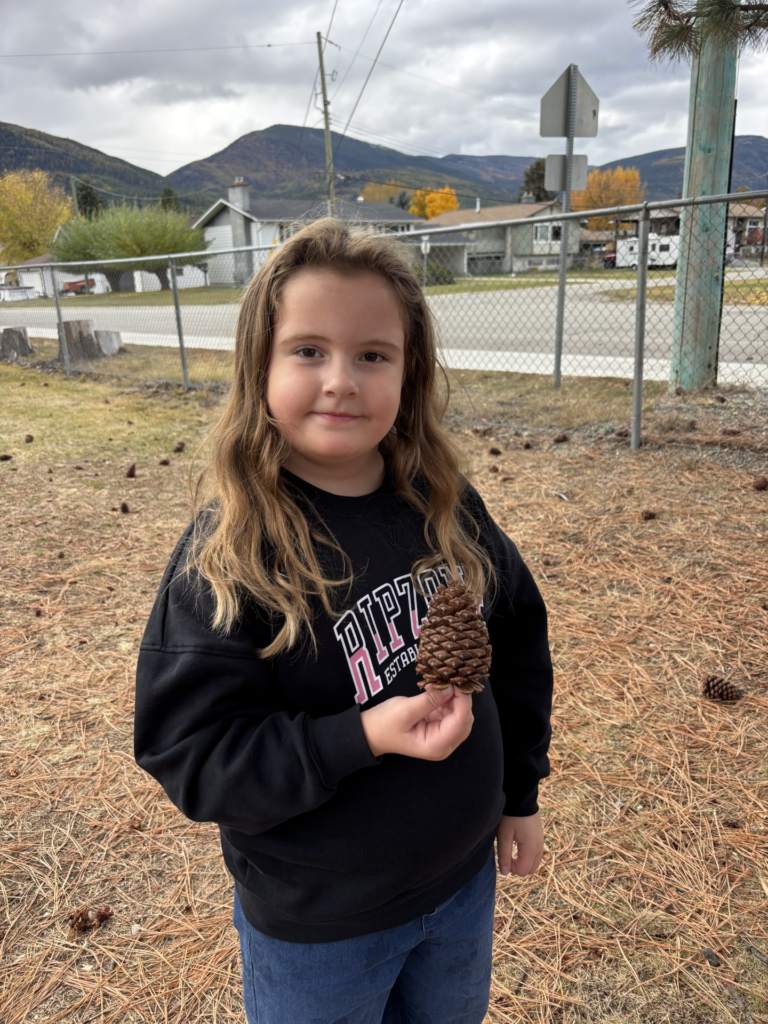
The activity we did aligns with the Grade 1 mathematics curriculum on measurement. We used pinecones as non-standard units of measurement to measure our heights.
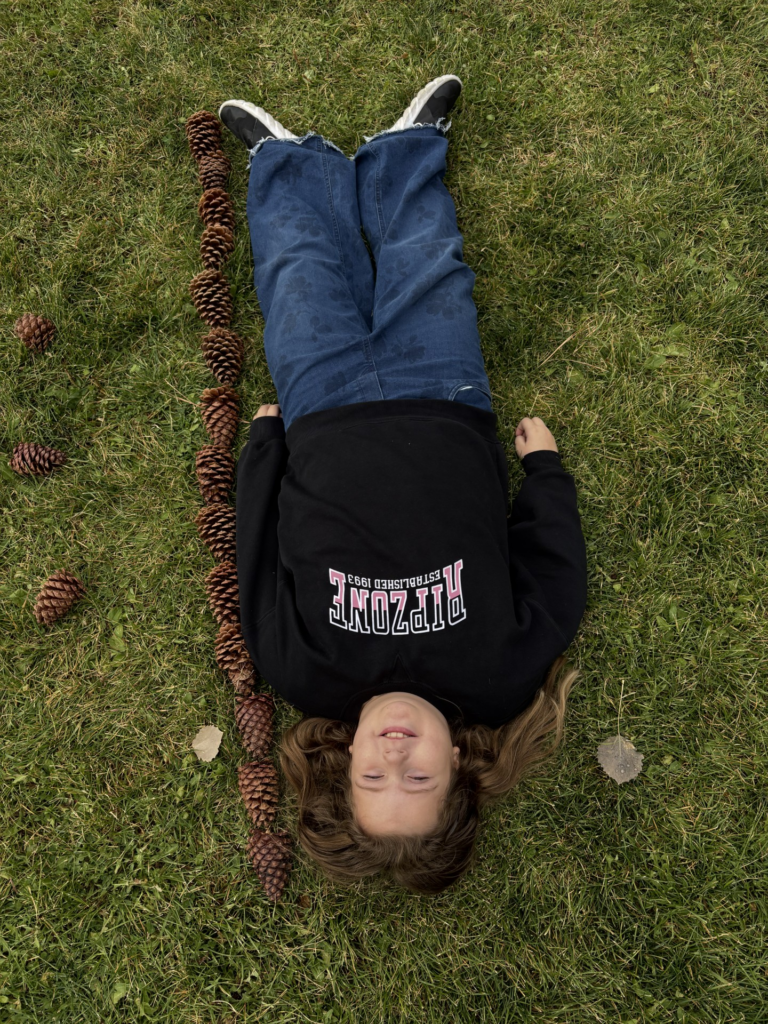
Avery was 14 pinecones tall and I was 16 pinecones tall! A conclusion a teacher would want to hear from a Grade 1 student is, “Miss Andersen needed two more pinecones because she is taller than Avery.”
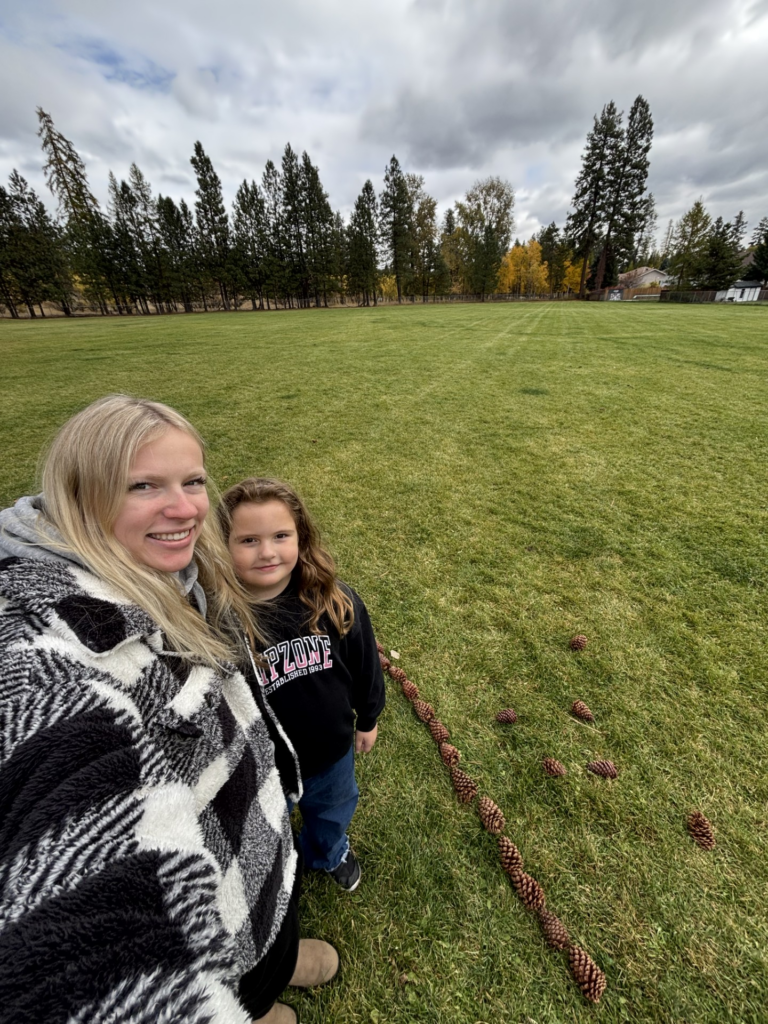
This activity was successful and it was really fun to do with my niece. She loves the outdoors and helping us around the house, so she was more than willing to help me! It is important to note that everything we took from the land, we put back where we found it.
Indigenous Math Resources
University of British Columbia (UBC) has created the Indigenous Math Network, which offers a wide variety of unit plans, lesson plans and Indigenous math resources for primary through high school. Many of the resources feature outdoor, land-based learning activities that help students explore mathematical concepts through connections to their local environment and community. How cool is that!
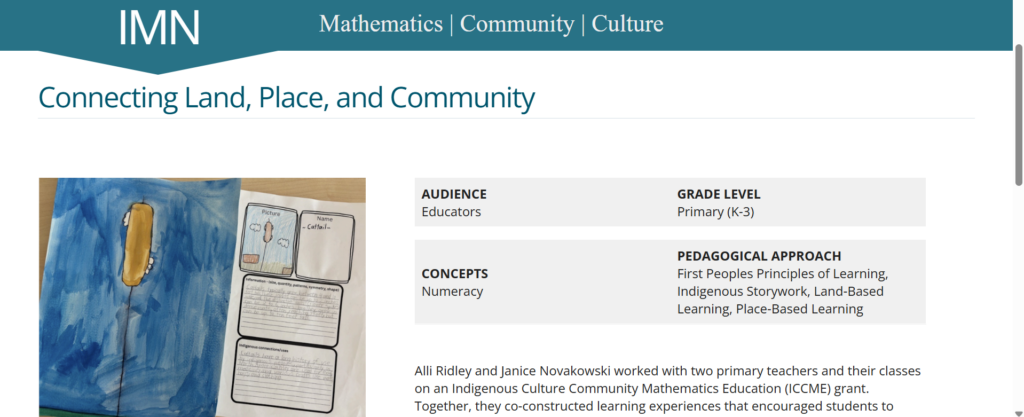
I choose to look into project Connecting Land, Place and Community for Grades 1-2. The project was cross-curricular, which I LOVE. It connects to English Language Arts through student journaling and to Art Education by having students create maps of local landmarks. It also connects to Mathematics as students identify shapes in their local environment, calculate the distance to local landmarks, measure distances and objects found in nature and apply mapping and measurement skills in meaningful, real-world contexts.
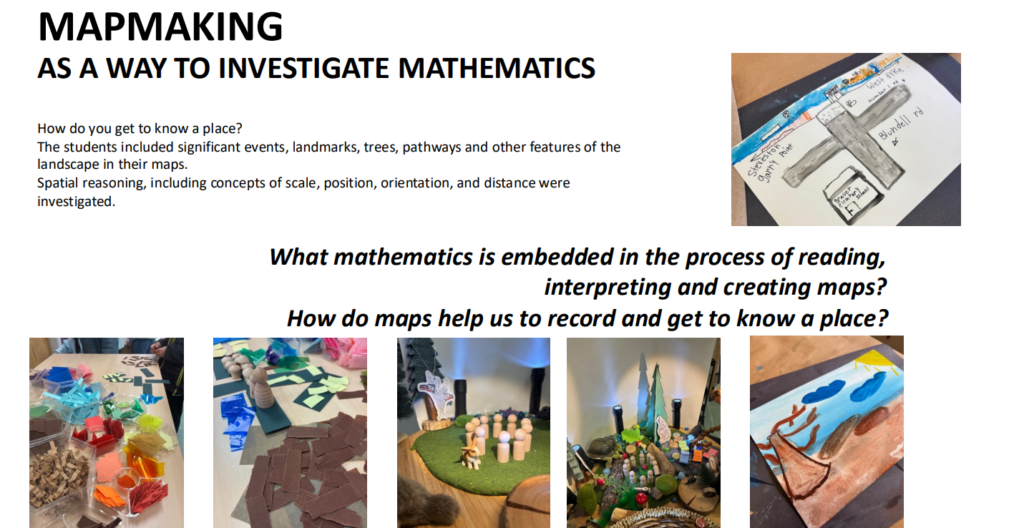
I love the idea of having students create an art project of a local landmark or a map of their community. This activity connects to mathematics because students can find shapes in their environment, measure and compare distances and use their spatial reasoning skills to create a map that shows where important places are located.
This activity connects to Grade 1 Mathematics Content Areas:
- Comparison of 2D shapes and 3D objects
- Direct measurement with non-standard units (non-uniform and uniform).
This activity connects to Grade 2 Mathematics Content Areas:
- Multiple attributes of 2D shapes and 3D objects
- Direct linear measurement, introducing standard metric units.
- Pictorial representation of concrete graphs, using one-to-one correspondence.
Geometry
As an introductory activity for K-3 geometry, students can go on a shape hunt outdoors. Students find objects in nature that are 2D shapes or 3D objects. For Grade 3, students could identify rectangular buildings or cylindrical tree trunks, document them, and explain the attributes that make them rectangles or cylinders.
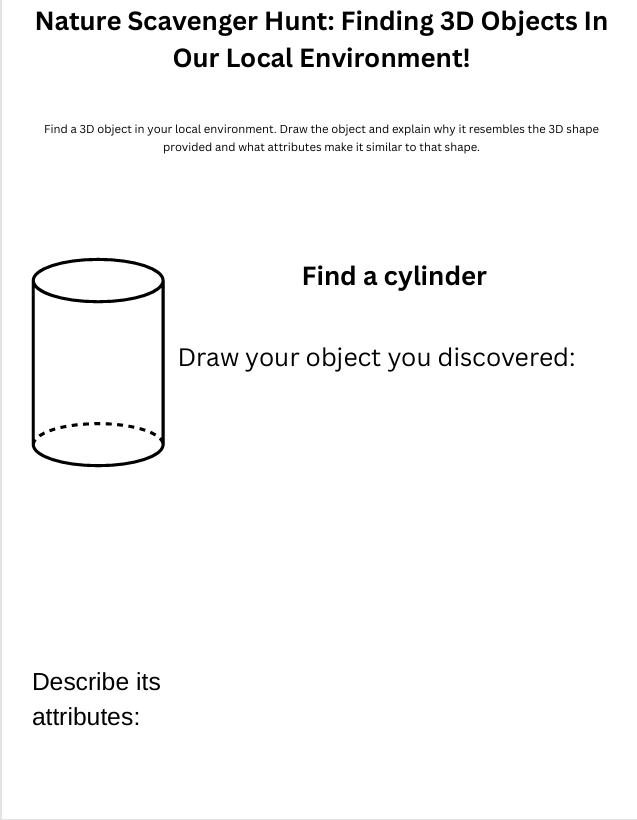
This activity can be completed individually or in groups and is a simple worksheet that teachers can easily create themselves!
That’s all for now! I look forward into looking at resources for Grades 4-7 next week!
Leave a Reply
You must be logged in to post a comment.