Free Inquiry Post #5
For this inquiry post, I will explore how outdoor mathematics can promote inclusion, the role of technology in learning math outside and address the challenges and considerations associated with outdoor learning.
Why Outdoor Math Supports Inclusive Education
Multi-Sensory Access: For young learners in Grades K-3, outdoor math activities should include sensory materials such as sand, water and gravel. Providing tools like buckets, shovels, pots and measuring cups encourages students to explore mathematical concepts through hands-on play, problem-solving and collaboration.
Movement and Self-Regulation: Outdoor learning spaces offer flexibility for students who benefit from frequent movement and physical activity. This approach can be especially beneficial for students who experience challenges with attention and focus increasing engagement, focus and attention.
Reduced Math Anxiety: The video below explains why students experience math anxiety. It is important for educators to understand its causes and learn how to support students. Outdoor math learning can help reduce stress by removing some of the rigid barriers and silence often associated with learning math indoors. When learning is more playful and enjoyable, students are more likely to retain what they learn.
What Are The Challenges and Considerations Associated With Outdoor Learning?
What I think are limitations to teaching math outdoors:
- Weather and Seasonal Limitations: Sudden changes, extreme temperatures, or storms.
- Safety Concerns: allergies, rough terrain, wildlife encounters and ensuring students stay within boundaries.
- Need for Planning and Classroom Management: Effective planning and classroom management are important safety considerations in outdoor learning, as clear expectations, boundaries and supervision help ensure students remain safe.
- Accessibility and Inclusion: Outdoor learning activities should be planned to ensure all students can participate, regardless of their physical abilities or learning needs. Teachers must be flexible and adapt activities to support all learners, which can sometimes be challenging when meeting diverse needs in an outdoor environment.
- Aligning Outdoor Activities with Curriculum: I am about to have a reflective moment, but finding activities that directly connected to the BC curriculum standards was difficult. I had to dive deep and I will continue to do so throughout my career. Outdoor learning, real-world experiences and meaningful learning opportunities are values I hold in both my personal and professional life, but it is also important that my students learn the curriculum.
Assessment In Outdoor Mathematics
It is important that students understand the mathematical concepts and knowledge outlined in the curriculum. However, it is equally important that they develop skills such as collaboration, communication, and critical and reflective thinking. How can teachers document and assess the development of these competencies?

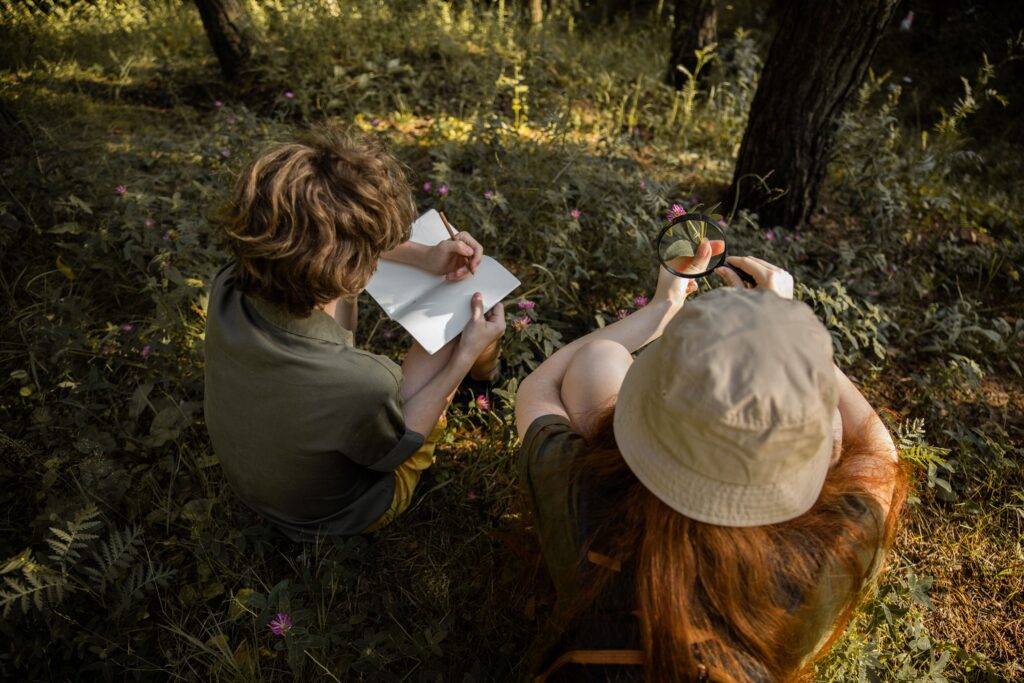
Journals are a great method for collecting evidence of learning. They allow students to document their thinking and learning processes over time. Teachers can use math journals as both formative and summative assessment tools.
Photo from Pexels.
Observation checklists can be used as a formative assessment tool to evaluate students’ observable behaviours, providing valuable and objective evidence of learning and development. They can help teachers identify students’ strengths and areas for improvement. They are a great assessment method for tracking student participation, collaboration and engagement.
Photo from Pexels.

One thing I took away from Anne Davies’ text, Making Classroom Assessment Work, is that self-assessment teaches students how to self-monitor and self-regulate as independent learners. This can be done through journals, exit tickets, verbal or written reflections. Younger students can use thumbs up or thumbs down to assess their understanding of concepts. Students can also reflect on areas they are working on and set goals to further develop their mathematical learning.
Photo from Pexels.
Leave a Reply
You must be logged in to post a comment.