Free Inquiry Post #3
Last week, I attended a Truth and Reconciliation workshop. While the presentation indoors was educational and engaging, I found myself restless and struggling to focus. When the workshop moved outside to the outdoor classroom, everything changed. Listening to an Elder, playing Ktunaxa games and being active outdoors helped me feel calm, present and fully engaged. The warmth of the fire, the fresh air and the beautiful sunshine created an environment where I could focus and learn more effectively. Experiences like this remind me how meaningful outdoor learning is and how strongly it can support both learning and mental well-being.
This experience clarified how much being outdoors supports my focus, engagement and well-being. It also inspired me to explore engaging and meaningful outdoor mathematics activities and resources for students in Grades 4-7.
Activity For Grades 5-6
I was trying to find resources specifically for teaching Grades 4-7 mathematics outdoors and came across a website called Educate Outside, which offers free resources and activity ideas for teaching math and science outdoors across a variety of grade levels.
This website offers free resources and worksheets for students to complete and engage with during outdoor learning activities!
The activity I chose was Area and Perimeter Scavenger Hunt: Shape, Space and Measure. Blow is an image of the activity and attached on the website is the lesson plan!
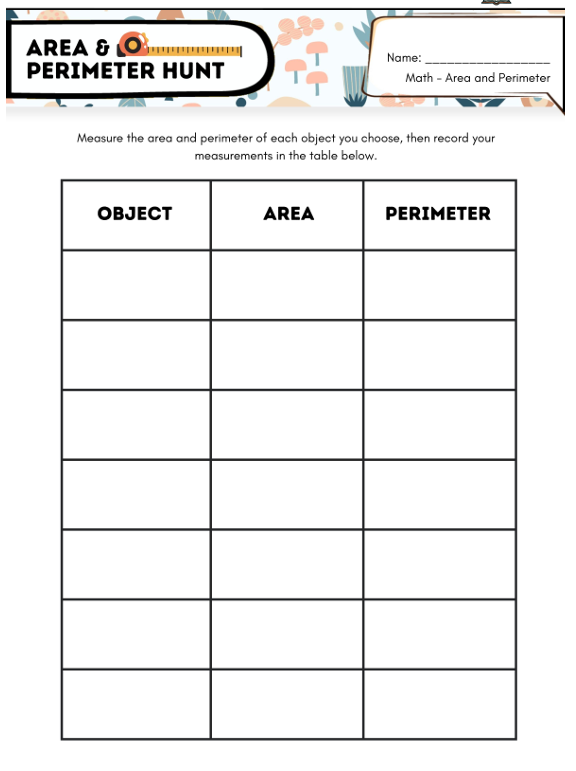
This is the worksheet students can use when exploring outdoors. This activity would fit Grade 5 math content areas:
- Area measurement of squares and rectangles
- Relationships between area and perimeter
Connects to Curricular Competencies:
- Develop, demonstrate, and apply mathematical understanding through play, inquiry, and problem solving.
- Connect mathematical concepts to each other and to other areas and personal interests.
Surveys
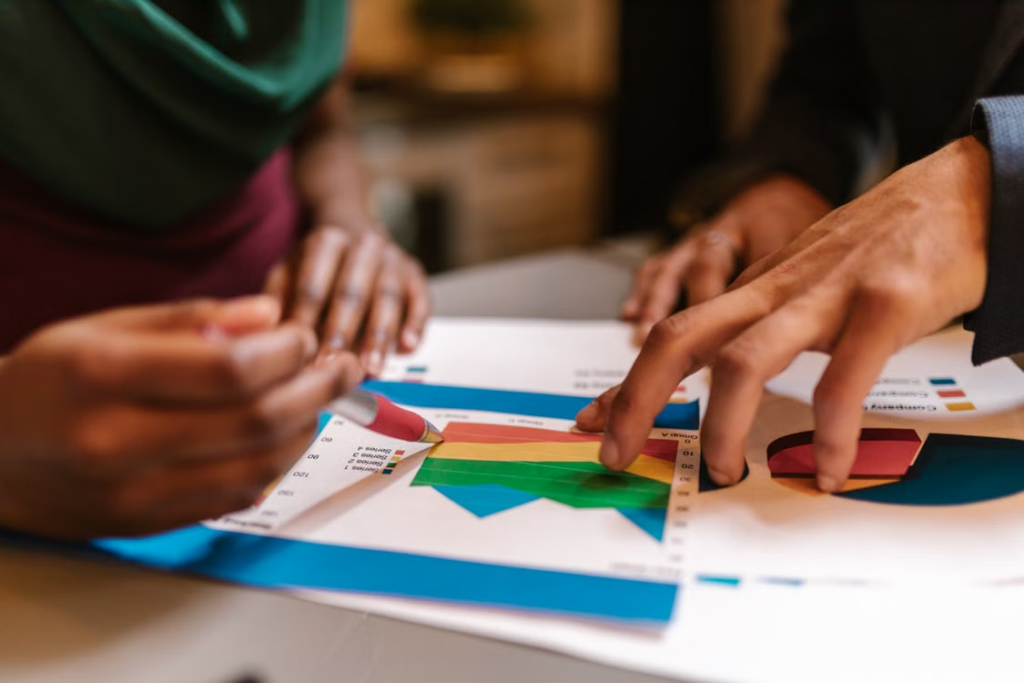
Image from Pexels created by RDNE Stock project
This activity can extend to Grades 4–7 under the BC Curriculum. Students can step outside the classroom and walk to a local park to observe cars, people, or animals and record their observations. Younger grades could simply collect data and create a chart as a class to represent what they observed. Older grades can collect data and answer questions such as “What is the most common colour car?” Students can collect data and represent their findings in different ways.
For Grade 4 mathematics students could observe cars, record vehicle colours and tally them. Students could create bar or pictographs and compare results. The BC Grade 4 learning standards include representing data using one-to-one and many-to-one correspondence in bar graphs and pictographs.
Students Explain Their Learning
As students get older, they become better at presenting what they have learned and explaining their thought processes to the class. After completing a math activity outdoors, students can participate in a reflection circle. During the reflection, a talking stick or pinecone can be passed around the circle and whoever is holding it can share what they observed, something new they learned, or any questions they still have.
As a summative or formative assessment students could journal what they have learned and is a great and open-ended way for students to document mathematical l thinking and learning.
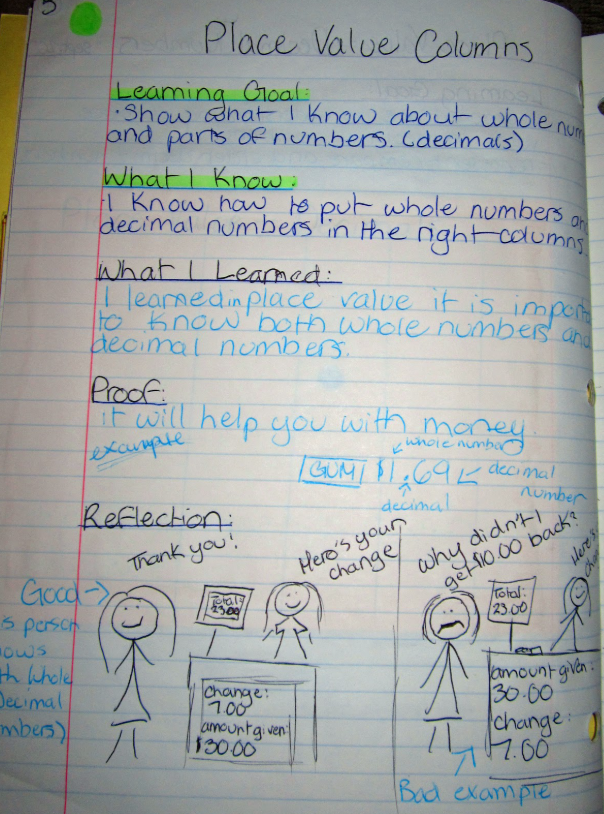
This is a great example of a journal entry in which a student documents their learning goal, what they already know, what they learned during the activity or lesson, evidence of their learning and a reflection on their experience.
This example shows that outdoor mathematics learning, journal entries allow students to record observations, explain their mathematical thinking and reflect on how they applied math concepts in real-world contexts. This helps deepen understanding and encourages students to take ownership of their learning. This is something I might use as a form of assessment during my practicum that can be done outdoors!
Technology and Outdoor Learning
Students in middle school are more familiar with and able to use a wider range of technologies. These technologies can help connect students to mathematics learning in meaningful ways. For example, Grade 7 students can use the iNaturalist app to collect data about biodiversity in their local community. They can record the number and types of plants, insects and animals they observe in their local environment, then organize their findings using graphs or tables. Students can analyze their data to make inferences about which areas of their community support greater biodiversity. They can also explain why they chose a particular method of data representation and how it effectively communicates their results.
This idea could be expanded into a large cross-curricular project where students collect and analyze data to determine which areas of their local environment support the greatest biodiversity and explain why. This would be a great resource for finding local Ktunaxa plants in the community. This is one example of how using apps can be incorporated in learning mathematics!
I tested the accuracy of the app on my dog Bentley:
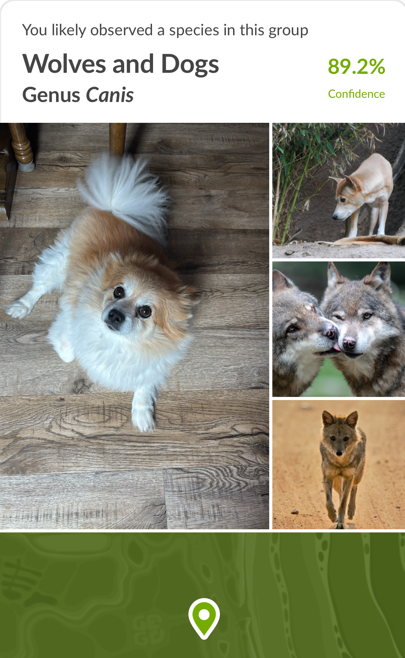
The photo taken is of a bush in my backyard:
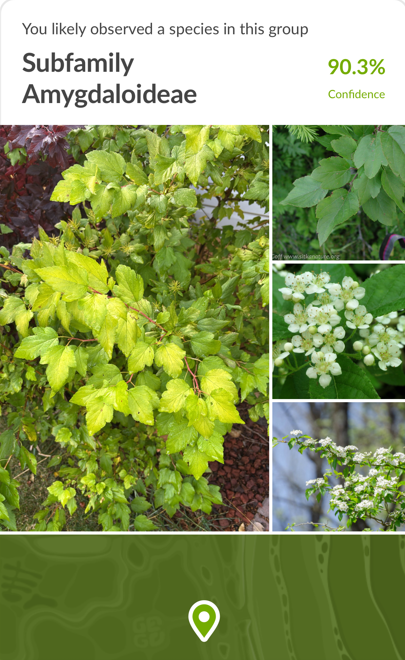
I believe this app is accurate because the bush produces small white flowers during the summer. Since it is currently fall, there are no white flowers present, which matches what the app shows.
That concludes this week’s research. Next week, I plan to explore outdoor learning opportunities and mathematics resources for Grades 8-9!
Leave a Reply
You must be logged in to post a comment.