Creating Animal Dioramas
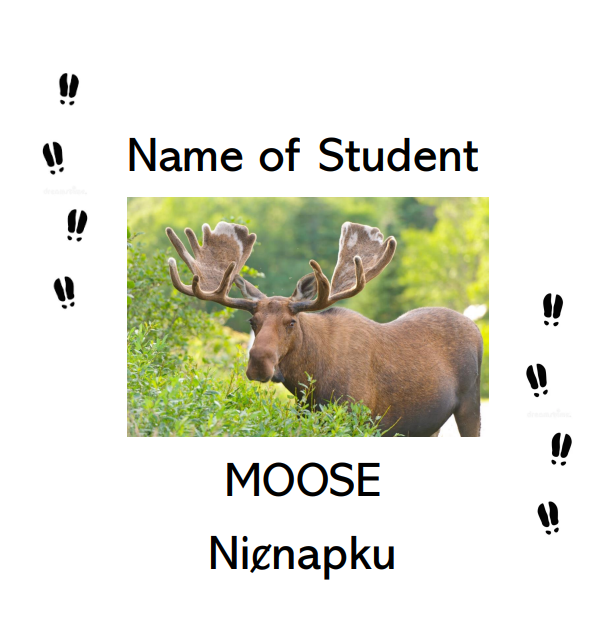
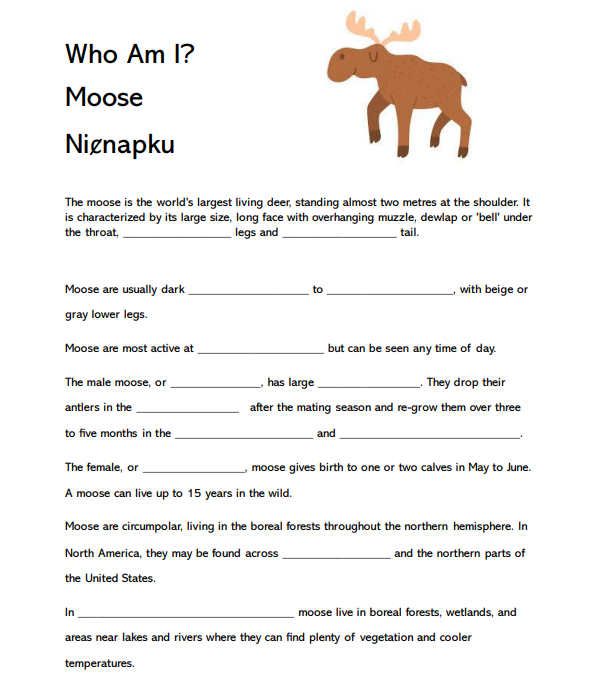
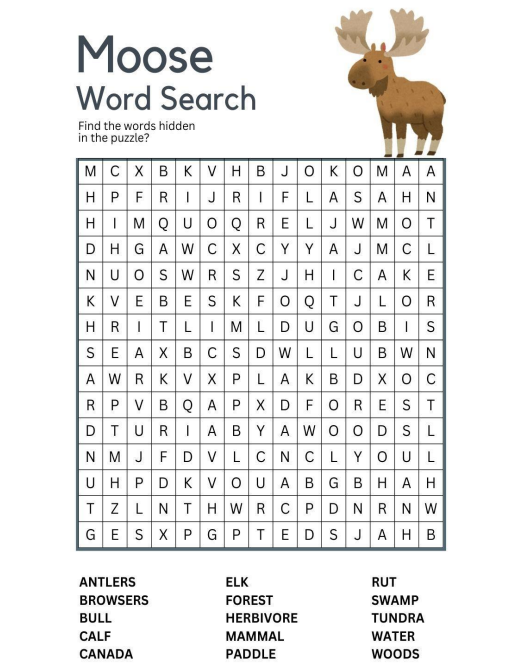
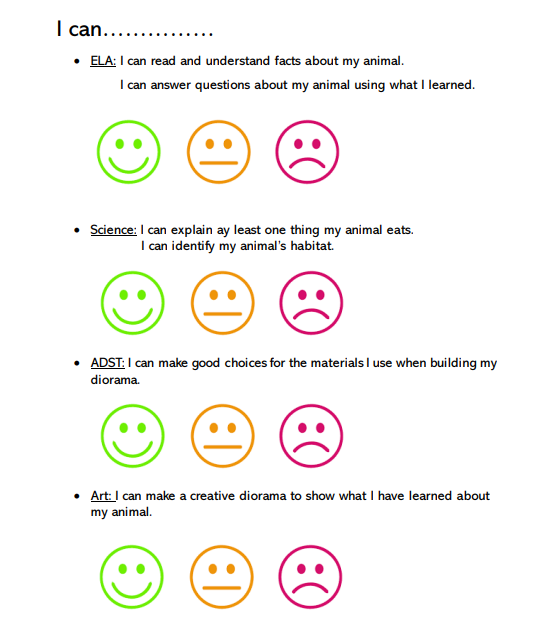
For this in-situ activity, students created a diorama of their chosen animal and its habitat, along with writing and practicing how to say the animal’s name in Ktunaxa. The booklets we created were used to inspire students to think of ideas for their dioramas, provided information to learn more about their animals and guided them through the self-assessment at the end. The main focus of the activity was completing the dioramas.
My Student
My student started with the crossword because he said he really enjoys them and is good at them. Next, he moved on to the self-assessment and asked me what it was for. I explained that he should read each statement and then colour in the face that showed how he felt about the activity. He told me, “I would give myself a green smiley face for creativity because I am very creative!”
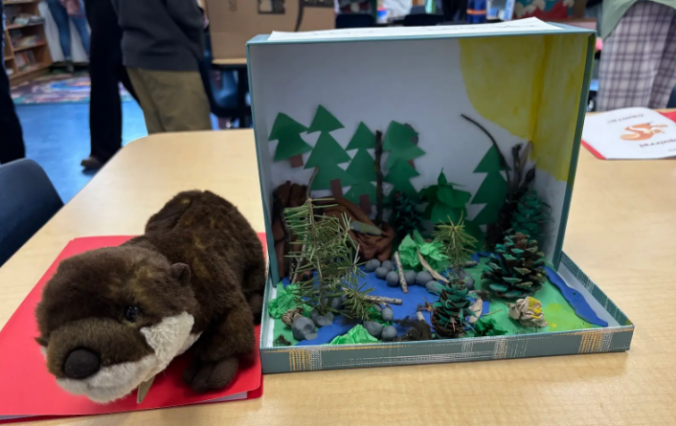
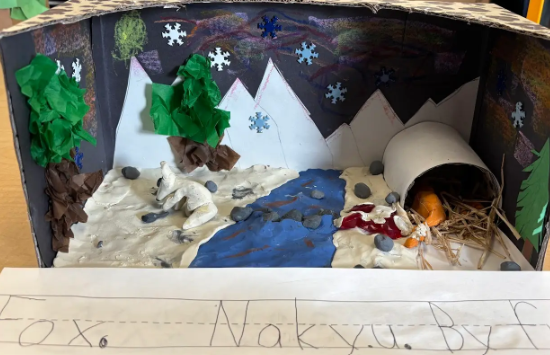
After that, without any instruction, he began planning what he was going to include in his diorama. His ideas included a waterfall and a lake made from tissue paper, a moose and trees made from clay and even though you cannot see it, a clay cave. He was a creative wizard and we balanced each other out because I’m not the most creative person!
This is an image of my student’s diorama, featuring a moose in a forest habitat with a river flowing from a waterfall, trees and plenty of grass for the moose to eat.

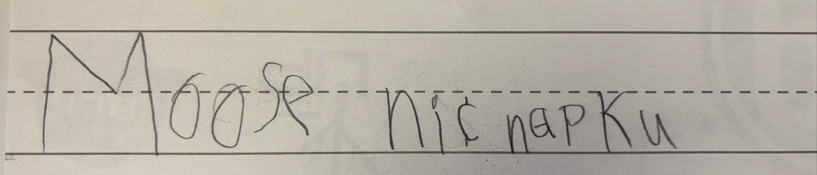
Below is an image of my student writing the word “moose” in both English and Ktunaxa.
Self-Assessment
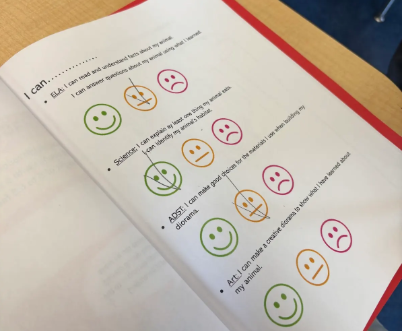
ELA: I can read and understand facts about my animal.
I can answer questions about my animal using what I learned.
For this item, he marked the “so-so” face because he did not really explore the fun facts or use the booklet to find any.
Science: I can explain ay least one thing my animal eats.
I can identify my animal’s habitat.
He knew these two because he already had prior knowledge about moose and elk. He explained that his dad hunts and since the moose is a local animal, he is familiar with the types of environments they live in.
Art: I can make a creative diorama to show what I have learned about my animal.
For this item, he marked the green smiley face. I completely agree my student was incredibly creative, engaged, enthusiastic and full of ideas for this project!
How This Activity Ties to Grade 2 Science Curriculum
Curricular Competencies:
Experience and interpret the local environment.
Demonstrate curiosity and a sense of wonder about the world.
Reflection
This was such a fun learning experience in the Grade 2 class! Students were engaged during the read-alouds, while creating their dioramas and completing the booklet activities. Creating dioramas is something I would definitely use in my own teaching practice as a creative way to reinforce student learning.
However, I would likely do this with higher grade levels, such as Grades 4 or 5, because Grade 2 students need a lot of support. If I had my class create dioramas, I would also include an oral language component, where students could present their diorama and explain how it connects to their learning.
Overall, this was a really fun and engaging experience. Experiences like this make me feel what it is truly like to be a teacher!
My AHA! Moments
I was really surprised by how engaged and excited the class was about creating dioramas. As a teacher candidate, I do not have much experience with activities like this, so I never really know what will be a hit or a miss. I was also thrilled to see how many students knew and wanted to share the Ktunaxa names of their animals, so cool!