
Class Reflection on Teaching “The Wolves in the Walls” Using Virtual Reality (VR) and Lesson Overview:
As a class, we had the opportunity to participate in an in-situ experience at a local elementary school, where we read literature and used VR with a Grade 5/6 class. First, the teacher candidates read The Wolves in the Walls by Neil Gaiman and Dave McKean to students that were in five small groups. We designated specific readers for certain sections so that students could have movement breaks throughout the story, since it is a longer read. This also helped build suspense as the story progressed. After students were read the story, we set up the VR for students to experience the story in a different way.
My Personal Experience with VR in the Design Lab:
I thought it was really interesting to use VR and see the whole story come to life. One key difference between the book and the VR version is that Lucy, the main character, narrates the story in VR, while the book is told from a third-person point of view, which I found especially interesting. The illustrations in VR were super cool and immersive, but they also created a creepy, eerie vibe that slowly built up until the wolves came out of the walls. Overall, I thought it was a really cool and educational experience.
Book Summary:
This story, The Wolves in the Walls, is about a little girl named Lucy who believes there are wolves living inside the walls of her house. She tries to explain to her family that she can hear them and is certain they are there. However, her parents do not believe her and think the noises might be mice or bats. Until one day, the wolves come out of the walls and chase Lucy and her family out of their home. The family is forced to camp outside until Lucy convinces them that they must take back what is theirs. They go into the walls of their house and successfully drive the wolves out.
Before the last group of students who had the book read to them were given a worksheet where they explored the deeper meanings of words such as sustained and brandish. Due to the classroom being crowded and the noise levels being high, many students were not able to complete much of the booklet. However, some students were able to finish it, reflecting on their experience by drawing pictures and writing sentences in the booklet.
After students read the book, I was part of the group that helped students get set up with the VR. First, we explained to the students that if they felt uncomfortable, nauseous, or unsure, they needed to tell us and we would immediately stop the VR. We explained that we would help set them up with the headset and that if it felt uncomfortable or did not fit their head properly, they needed to let us know to avoid any discomfort or the headset falling on the ground and breaking.
Both the students using the VR set and those not using it were reminded to be respectful of their classmates’ space to avoid anyone getting surprised or hurt. Students were also told that we had created a boundary and if they stepped outside of it, they would no longer see the game but instead the classroom. At that point, we could either physically guide them back to their boundary with permission or verbally direct them to where the marker was on the floor.
Curricular Connections:
Applied Design, Skills, and Technologies – Grade 6
- Big Idea: Design can be responsive to identified needs.
= This big idea aligns with using VR because students learn that technology can be used for literature and storytelling. The shift from third-person narration in the book to first-person narration in VR demonstrates how design choices affect user experience.
- Curricular Competency: Demonstrate an awareness of precautionary and emergency safety procedures in both physical and digital environments.
= During the VR activity, students learn how to use the equipment in a respectful and safe manner. They also learn about spatial awareness and respecting their classmates’ space.
- Curricular Competency: Select, and as needed learn about, appropriate tools and technologies to extend their capability to complete a task.
= Students learn that technology can be used to enhance literary knowledge, skills and learning.
English Language Arts – Grade 6
- Big Idea: Language and text can be a source of creativity and joy.
= The VR experience enhanced engagement and excitement for students. This activity was a way to show that storytelling can evolve by using technology. In classroom practice, I have seen teachers use YouTube to tell stories and teachers telling a story using a doc cam.
- Learning Focus: Students will be able to decipher the difference between the same book being read in class and being shown using VR and how this can change their experience with the book and how they interpret the story.
Reflection:
I had an amazing time doing this activity with the Grade 5 and 6 students! They were very engaged with the VR and thought it was really cool and interesting. As Adrienne Gear mentions in her literature Powerful Thinking when students can visualize rich descriptions, locations and use their senses which in this case was sight and sound, improves reading comprehension and engagement (page 24). There were iPads set up for other students to observe their classmates in the story and we were able to keep track of where they were at or where they had left off in the story. I just wish I could have seen their comparisons and personal reflections of the book and VR experience in their booklets. Overall, this was a really fun activity and I always enjoy being in classrooms, meeting the students and working with them.
Pictures: Taken by my professor:
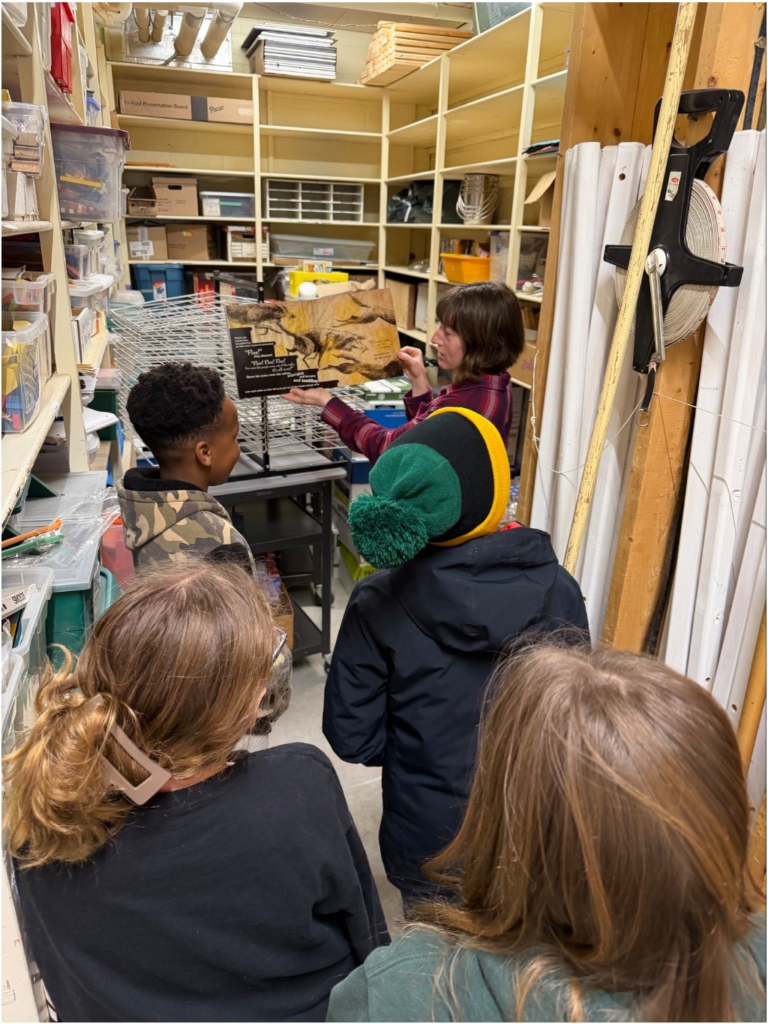
This is a photo of a teacher candidate reading The Wolves in the Walls to Grade 5/6 students.
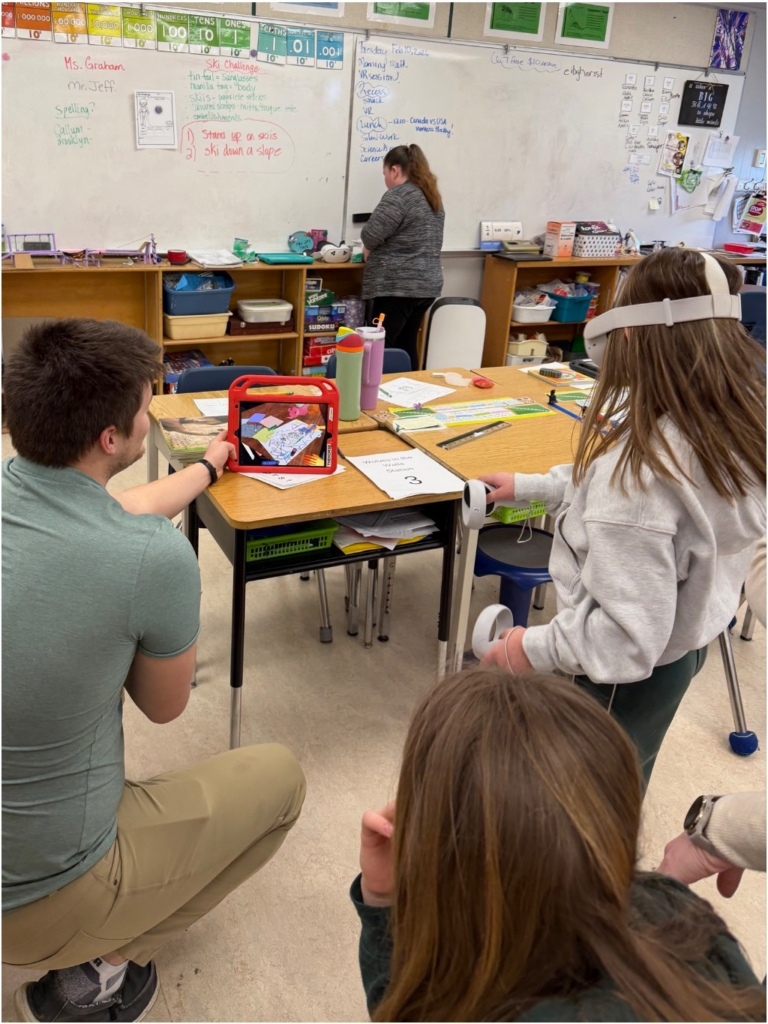
This is a photo of a teacher candidate watching a students point of view in the story using an iPad.
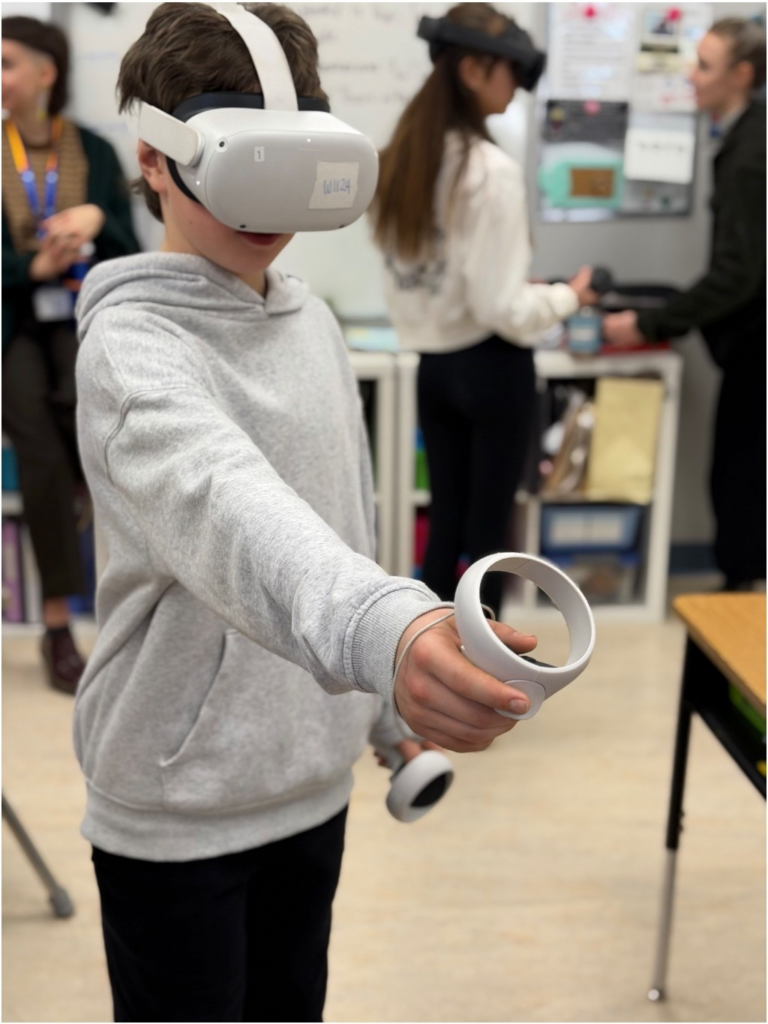
This is a photo of a student experiencing the story using VR.
Resources:
Gear, A. (2024). Powerful Thinking: Engaging Readers, Building Knowledge, and Nudging Learning in Elementary Classrooms. Pembroke Publishers.